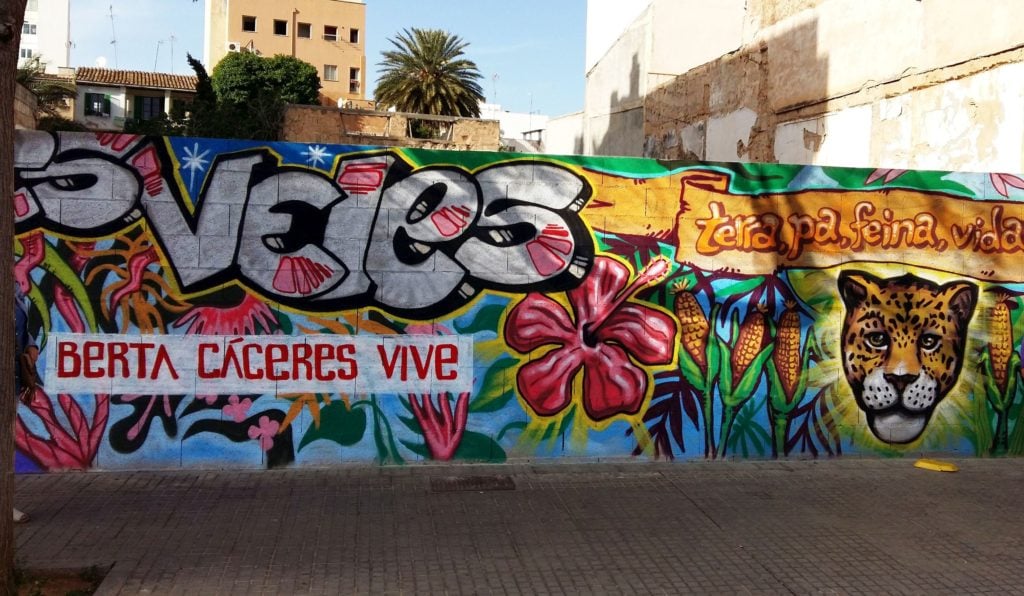
It's hard to believe that a decade has passed since the death of Berta Cáceres.
Cáceres, an Indigenous leader and celebrated environmental justice advocate, was gunned down in an organized crime operation just before midnight on 2 March 2016 at her home in La Esperanza, western Honduras.
Cáceres was targeted for spearheading grassroots opposition against the construction of an internationally financed hydroelectric dam on a river considered sacred by the Lenca people. She was murdered less than a year after winning the prestigious Goldman Environmental Prize for leading that same campaign.
The assassination was ordered by dam company executives and financed with money from international development banks, which backed the project despite serious questions about its legality and repression of community organizers that Cáceres had warned them about.
Cáceres was killed by hired assassins two days short of her 45th birthday, at a time when Honduras was the deadliest place in the world for communities daring to oppose land grabs and environmentally destructive projects. Gustavo Castro, the acclaimed Mexican environmentalist, was visiting Cáceres at the time and was also shot, but survived by feigning death until the hitmen left.
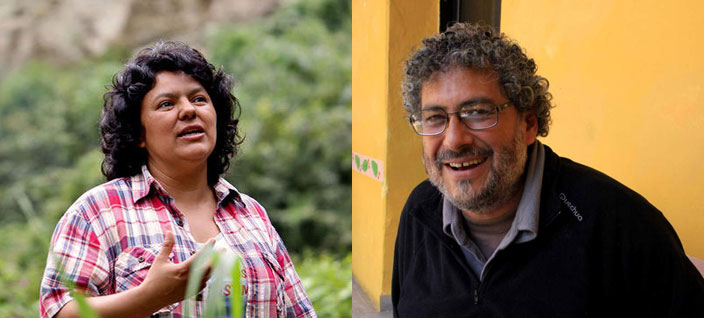
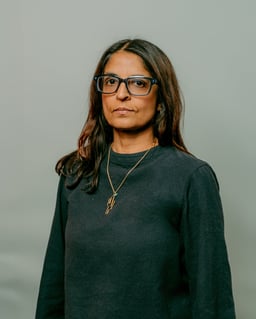
Berta Cáceres and Gustavo Castro. (Photo of Cáceres, courtesy Goldman Environmental Prize; photo of Castro by @mezcalit via Wikimedia Commons).
Cáceres was a brilliant political strategist and a grassroots human rights defender who dedicated her life to resisting the patriarchal neoliberal world order. She was a charismatic communicator, a rare leader who was able to bring people from different movements together around common goals.
Her death was both foreseeable and preventable by the state. It marked a before and after for many, including myself.
I woke up to the news on 3 March and immediately thought, ‘if they can kill Berta Cáceres, they can kill anyone.’ Investigating her murder led to smear campaigns, death threats and legal threats that left a mark on me professionally and personally, but understanding who Berta Cáceres was and why she was targeted made me a better reporter.
To mark the 10th anniversary, hundreds of people from across the world are gathering in Honduras this week to celebrate Cáceres’ life and demand accountability for all those responsible for her untimely death.
“Berta is still missed so much because she had that ability to inspire, to rally, to convince, she was a fabulous communicator,” Gustavo Castro told Drilled. “But it's precisely because of who she was that she is also still very present in movements all over the world.”
Berta Cáceres was not the first nor the last leader to be killed in Honduras. To understand why Honduras remains among the deadliest places in the world for land rights and environmental defenders, it’s crucial to understand the political and economic context in which Cáceres lost her life.
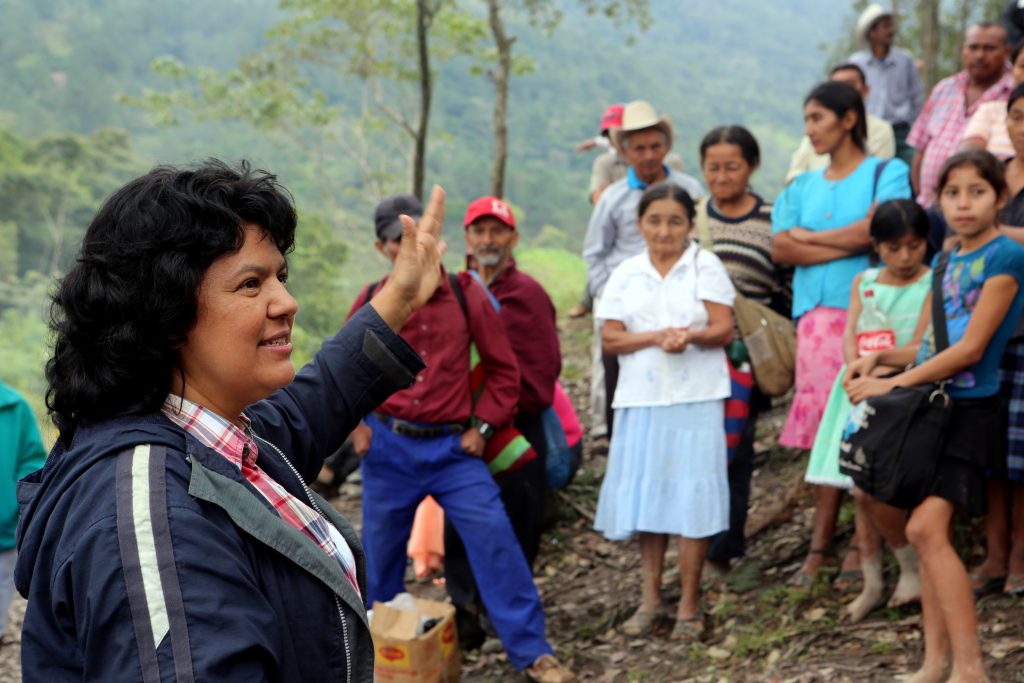
As part of the campaign against Agua Zarca, Berta organized a local assembly where community members formally voted against the dam, and led a protest where people peacefully demanded their rightful say in the project. (Photo: Goldman Environmental Prize)
Cáceres was a key figure in the resistance following the 2009 coup d'état in Honduras, orchestrated by a network of right-wing business, military, political and religious elites.
The post-coup National party government ended land negotiations instigated by the deposed president, Manuel Zelaya, and pushed a pro-business agenda centered around land grabs and internationally financed extractive projects such as mining, tourism resorts, dams and African palm plantations. Licenses were greenlit without the legally required consultation and environmental impact assessments, and with little regard for the impact on ancestral land rights, water sources, food security, climate change or human dignity.
Perhaps most controversial was the establishment of special economic zones (Zonas de Empleo y Desarrollo Económico, or ZEDEs), also known as investor-led “charter cities” that operate under their own legal, police, and tax systems, of which the best-known is Prospera, on the island of Roatan.
Cáceres was a perpetual thorn in the side of those profiteering from the extractive economic model, which made her a target. She was accused of being anti-development and a bad mother, and subjected to surveillance, intelligence operations and bogus criminal charges in what resembled a counter-insurgency campaign.
In the years following the coup, Honduras also became a major player in the cocaine trade with one of the highest homicide rates in the world outside an official war zone. Hundreds of thousands of people eventually fled to the U.S. amid mind boggling levels of militarization, corruption and violence in which activists, journalists, lawyers, women and young people were targeted.
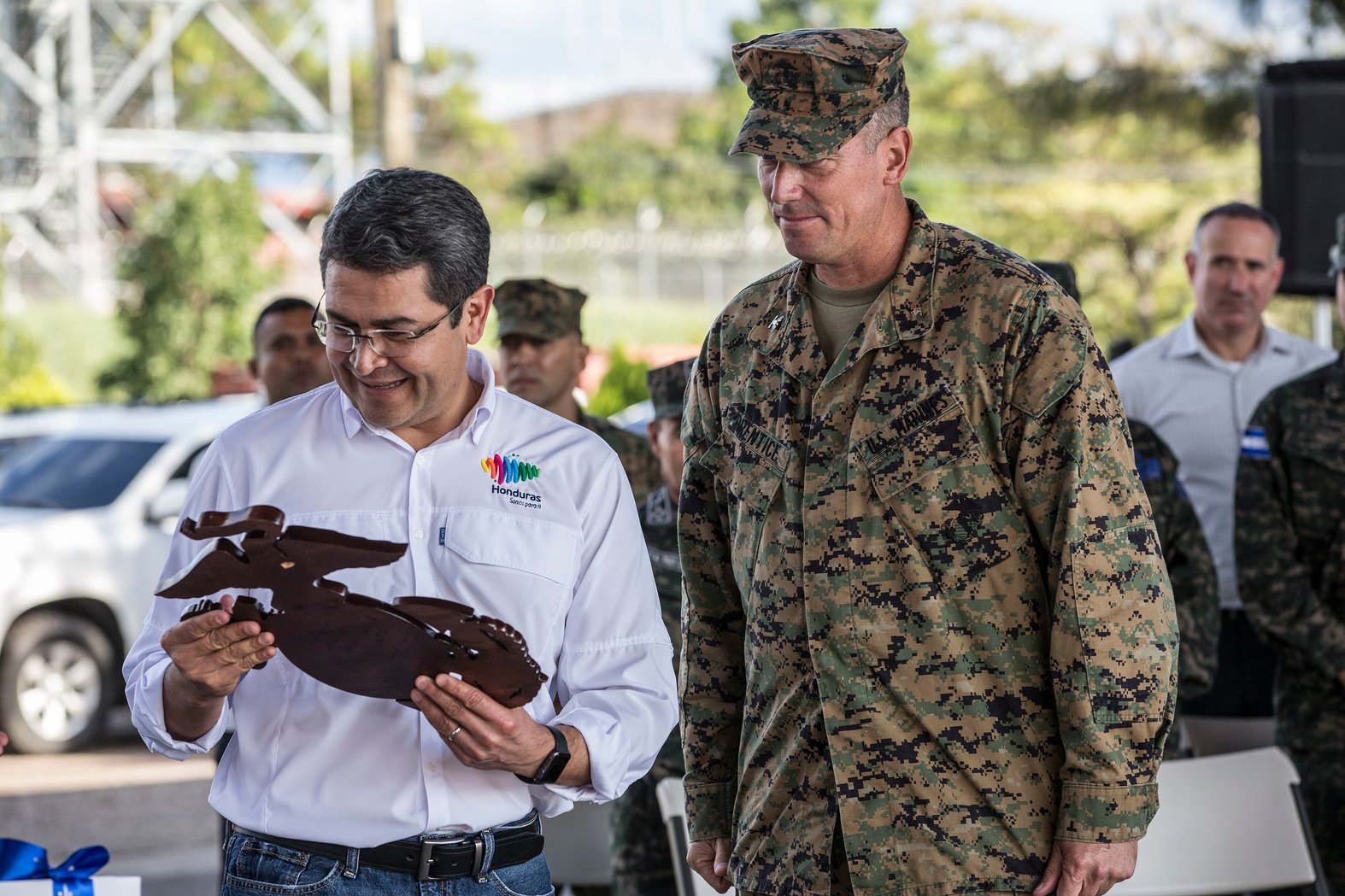
President Juan Orlando Hernández being presented with an award in November 2016 by Marine Col. Thomas Prentice, commanding officer for US Southern Command(U.S. Marine Corps photo by Cpl. Kimberly Aguirre)
The National party ruled Honduras for 13 years including consecutive terms for Juan Orlando Hernández (2012 to 2022), an evangelical lawyer known locally as JOH. Hernández created a loyal militarized police force, stole elections, bankrupted the public health system, and ran a transnational drug trafficking network with his brother Tony Hernández, a member of Congress.
Still, JOH was a man the U.S. and U.K. could do business with, that is until his arrest and extradition to New York City in 2022 on drug trafficking charges. In 2024 he was found guilty of trafficking vast quantities of cocaine and weapons into the U.S. and sentenced to 45 years in prison. Justice was brief, however. Donald Trump pardoned convicted drug trafficker Hernández last year, just weeks before authorizing an illegal military operation to depose Nicholas Maduro in Venezuela allegedly for drug trafficking.
Hernández’s criminal enterprise was in full swing when Cáceres was assassinated. She was gunned down less than a year after making a plea on behalf of Mother Earth in a rousing acceptance speech at the prestigious Goldman prize ceremony. ‘Wake up, wake up, humanity. We're out of time. We must shake our conscience free of the rapacious capitalism, racism and patriarchy that will only assure our own self destruction,’ Cáceres said. ‘Our Mother Earth - militarized, fenced in, poisoned, a place where basic rights are systematically violated—demands that we take action.’
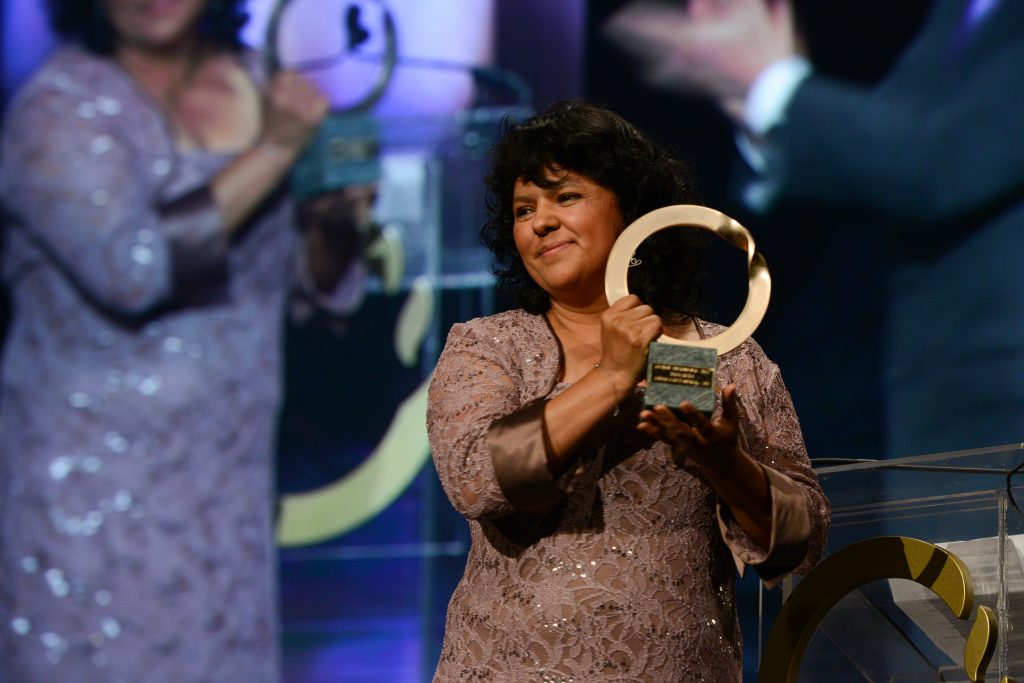
Berta Cáceres, 2015 Goldman Environmental Prize winner for South & Central America receiving her award. (Photo: Goldman Environmental Prize)
Justice for Berta
Cáceres was the most high profile environmental and land defender in the Americas when she was killed in 2016. Her death made headlines and triggered an international campaign for justice led by her four children and Copinh (the Council of Popular and Indigenous Organizations of Honduras), the grassroots organization Cáceres founded with her former husband in 1993.
The family's relentless drive to hold the individuals and institutions responsible for Cáceres’ murder through their actions and omissions accountable has led to unprecedented legal victories in Honduras, even while impunity has remained the norm.
So far, eight people have been convicted for the murder including the hitmen and intermediaries who were paid by the dam company, Desa, to plan the assassination. David Castillo, the company president and West Point-trained former intelligence officer, is the only person so far convicted for coordinating the crime. Desa’s financial manager Daniel Atala Midence, who was Castillo’s day-to-day accomplice in diverting funds for illegal land purchases and to pay informants, journalists, media outlets, government officials, police officers and the hitmen, remains on the lam more than two years after an arrest warrant was issued.
So far, only one police officer has been convicted of tampering with evidence despite documentation of a cover-up effort between company executives and government officials to blame Cáceres’ romantic partner, Copinh members and Gustavo Castro.
We now know that the murder—and the crimes that preceded and followed it—were part of a coordinated operation by a criminal network including Desa, hired assassins, U.S. trained former military officers (the intermediaries) and state officials. The cover-up of the masterminds behind the crimes was not a mistake, but part of the modus operandi,which has been successfully replicated against dozens of land and environmental defenders over the past decade.
“The same powers that murdered Berta Cáceres for defending the rivers and forests of the Lenca people, are operating in Garifuna territories, preventing food sovereignty and self-determination in our communities,” said Miriam Miranda, the Garifuna leader and close friend and comrade of Cáceres.
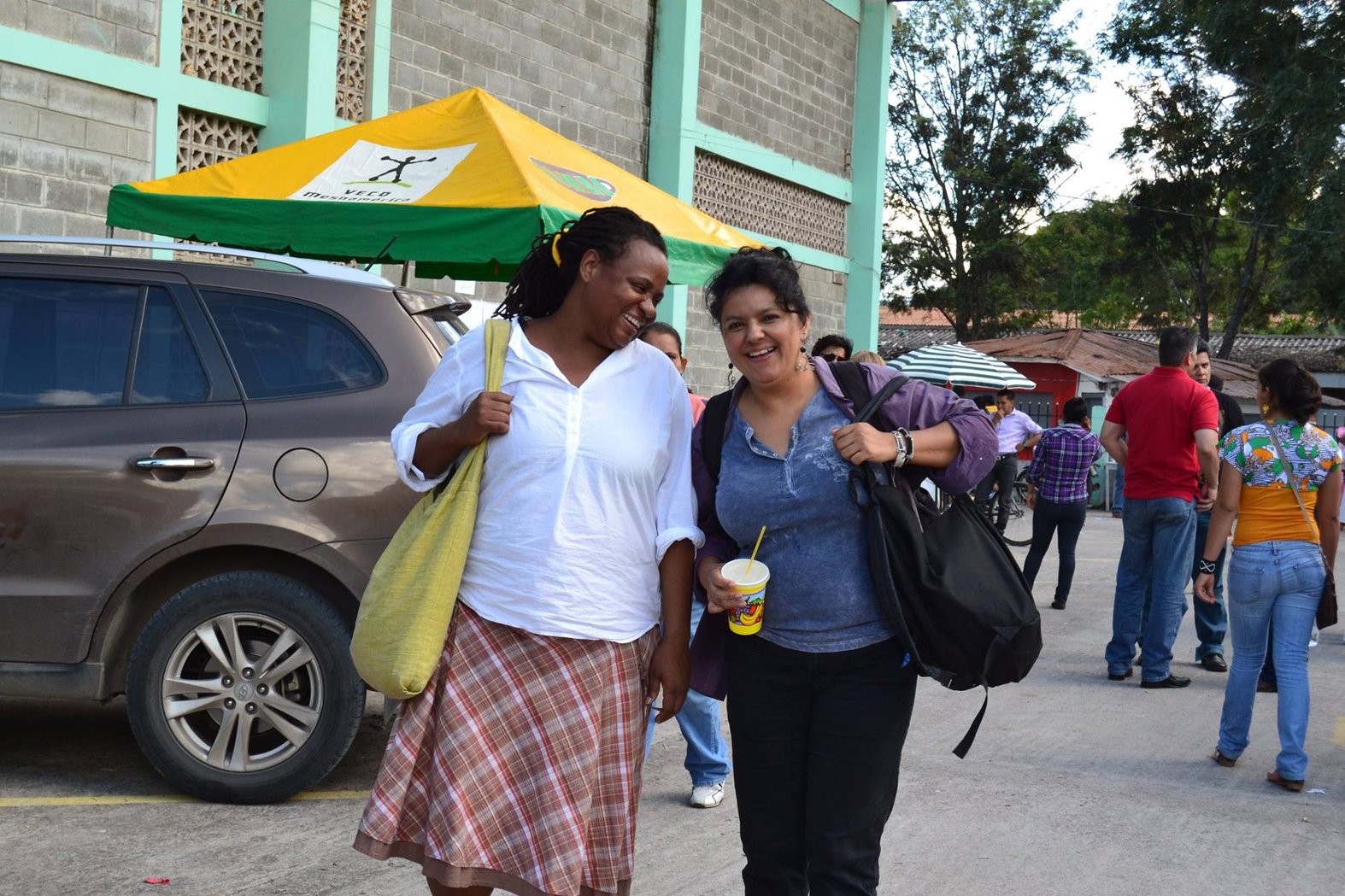
Berta Cáceres and her best friend, Garifuna leader Miriam Miranda. Photo courtesy Miriam Miranda.
Following the money is never easy. But earlier this year, a report by a team of independent international investigators tasked by the Inter-American Commission on Human Rights (IACHR) concluded that the dam company used shell companies to help divert two-thirds—or $12m—of its international development loans to infiltrate, criminalize and militarize the community’s legitimate opposition, and kill Cáceres. The banks failed to meet their international human rights and due diligence obligations, the investigation found.
The misuse of funds and violence perpetrated against the community was known by the majority shareholders, the Atala Zablah brothers (the financial manager's father and uncles), the experts found. The Atala Zablah family, who are part of one the country's most powerful political and economic clans, has always denied any involvement in Cáceres’s killing.
Neither the shareholders nor the high-ranking army and state officials implicated through acts and omissions, have been investigated, the report found.
Some (but not all) involved in greenlighting the dam project have been convicted of fraud, falsification of documents and abuse of authority. Yet, the license has not been revoked and the dam remains a threat to the Lenca communities in Rio Blanco who rely on the river for farming, food, medicines and spiritual nourishment, and where divisions instigated and paid for by the dam company have not healed. Rio Blanco continues to fight for collective land titles, arguably the issue at the core of this and so many other ongoing struggles in Honduras.
“This report is the product of the struggle by those of us who never tire of demanding justice,” said Bertita Zúñiga Cáceres, 35, who has led Copinh since her mother’s death. “But no external effort will be effective without action by the State of Honduras, which has a duty to honor the memory of Berta Cáceres and demand accountability for all the victims of this violence until we achieve comprehensive truth and justice,” Zúñiga said in response to the recent independent investigation.
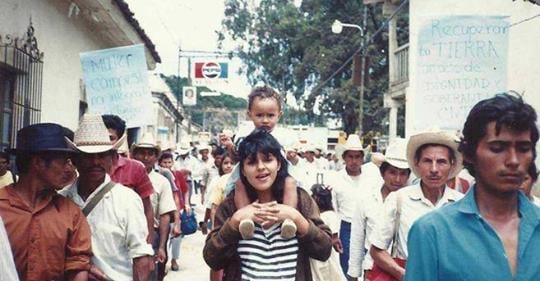
Berta at a protest with her second eldest daughter Bertita, who now runs her organization, Copinh. Photo courtesy the Cáceres family.
But accountability without radical changes to the structures and systems responsible for the corruption and impunity that enable land and economic inequalities—and the violence that follows—to flourish is unlikely.
“The accountability achieved so far is down to the perseverance of Berta’s family and Copinh, a 10-year uphill battle of them kicking and screaming, never letting their guard down, and naming names internationally,” said Karen Spring, co-coordinator of the Honduras Solidarity Project who mobilized help on the night of the murder. “It is not because the state has improved or addressed impunity or corruption.”
Impunity breeds violence
In September 2024, the celebrated environmental leader Juan López was shot dead outside a church in the Aguán region of Honduras, after years of threats linked to his role coordinating a grassroots campaign to stop a polluting iron ore mine owned by a wealthy couple with ties to the National party.
López was the most high profile defender to be killed since Cáceres. Like her, he had also faced smear campaigns, threats and bogus criminal charges.
López was assassinated during the government of Xiomara Castro, former first lady and wife of deposed president Zelaya, who governed for the Libre party between 2022 and 2025. Libre was born out of the post-coup social resistance with a promise to end impunity. At the time of his murder, López was an elected Libre councillor in Tocoa, a city in the Bajo Aguán region, investigating an alleged corruption network run out of the mayor’s office.
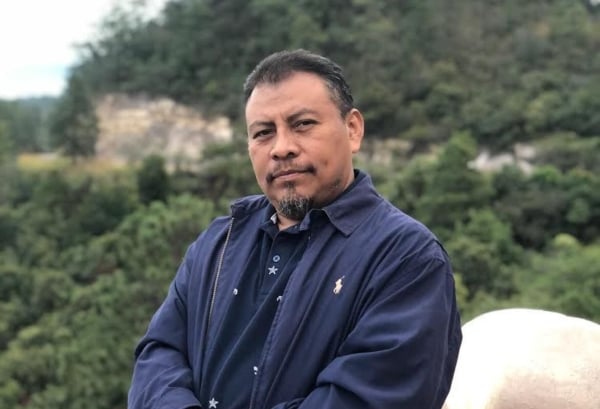
Juan López in Honduras. (Photo courtesy the López family and Amnesty International).
A group of UN experts called for an independent investigation that included the potential role of the mining company and local politicians, but so far only three suspected hired assassins have been charged and are scheduled to go on trial in June. The masterminds remain free.
“In Honduras and across Latin America, the factors driving the relentless repression of environmental defenders are structural and deeply entrenched,” said Michel Forst, the UN special rapporteur on environmental defenders. “The international outrage that followed Berta Cáceres’ assassination was real, but outrage without accountability is quickly absorbed by impunity.”
López was among at least 95 land and environmental defenders (including Cáceres) killed and disappeared in Honduras between 2 March 2016 and the end 2024, according to Global Witness, the climate accountability organization. Indigenous and Afro-descedent people, who represent 7% of the total population in Honduras, accounted for 27% of the murdered defenders, while 31% were small scale farmers or campesinos.
Much of the violence against campesinos has taken place in the Bajo Aguán, a lush mineral-rich region in northern Honduras where paramilitary groups and assassins have made hay working for the armed forces, agribusinesses, corrupt politicians and drug traffickers. The current land disputes date back more than 30 years to a World Bank-funded land modernization program that campesino collectives say led to thousands of hectares of farmland being fraudulently and coercively transferred to businesses that grow African palms, which are exported to the west for biofuel and traded in the carbon credit market.
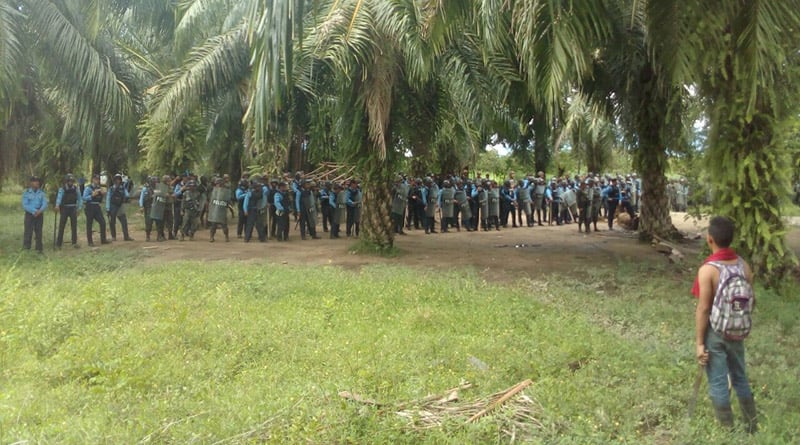
Police face off against campesinos in the Bajo Aguán. Photo by Jorge Burgos.
The Castro administration commissioned a cross-ministry inquiry into the protracted Aguán land dispute, and found systematic irregularities over decades of evictions. But despite the historic return of land titles to 14 campesino cooperatives, most of the recommendations had not been implemented before Castro left power in January 2026.
The Trump-backed new president, Nasry ‘El Papi’ Asfura Zablah—a construction magnate with Palestinian roots who supports Israel—signals a return of the old-school economic and political elite that has long opposed even the most modest land reforms.
“The return of the National party could be fatal for us,” said Yoni Rivas, a campesino leader who has lost multiple close colleagues and has spent long periods in hiding due to death threats.
Libre's rise to power brought relief and hope for the social movement after 13 years of National party abuses. Castro’s support for the independent Cáceres investigation, the Aguán land inquiry, and an attempt to rein in the ZEDEs, signaled an intention to strengthen weak institutions and break the stranglehold of the economic elites.
But the reaction from global and local elites—some even with ties to the Libre party—was extreme including an avalanche of compensation claims by investors in 2023/24, mostly for projects that were sanctioned irregularly by the post-coup narco administration and had led to organized community opposition. The claims included almost $11bn by the tech billionaire investors behind Prospera, the ZEDE on Roatan, in response to Castro’s attempt to repeal the ZEDE law.
In the end, the Castro government failed to change the status quo, according to multiple legal experts, analysts and community leaders consulted by Drilled.
“Investigations that fail to lead to structural reforms are a failure,” said Edy Tabora, director of the law firm Justicia para los Pueblos (Justice for the People).
According to Forst, the status quo in Honduras, and across Latin America, remains untouched thanks to the capture of state institutions by economic interests linked to extractive industries and large infrastructure projects; the criminalization of protest and the militarization of Indigenous and campesino communities; and the persistent failure to prosecute those who order the killings of environmental and land defenders.
Still, there were few public protests to pressure the Castro administration despite its shortcomings. Tabora argues that the social movement was exhausted, and held on to the hope that Libre would eventually come through given that so many progressives joined the government.
However, Karen Spring argues that impunity reigns no matter who's in power in Honduras because the global political-economic system is designed to protect international capital and local elites.
“The neoliberal system needs impunity, needs corruption, it needs political actors to be involved in organized crime in order to advance in countries like Honduras and many others around the world. It's very unfortunate but communities trying to promote alternatives, protect their climate, their environment, and their livelihoods are up against a mafia criminal system that is working exactly how it was intended,” Spring told Drilled.
International injustice
The tropical Caribbean coast in northern Honduras is dotted with Garifuna communities, where some of the worst economic and state violations continue to be perpetrated with racist zeal. The Garifuna are Afro-Indigenous people whose ancestral territory extends across Honduras, Belize, Guatemala, and Nicaragua.
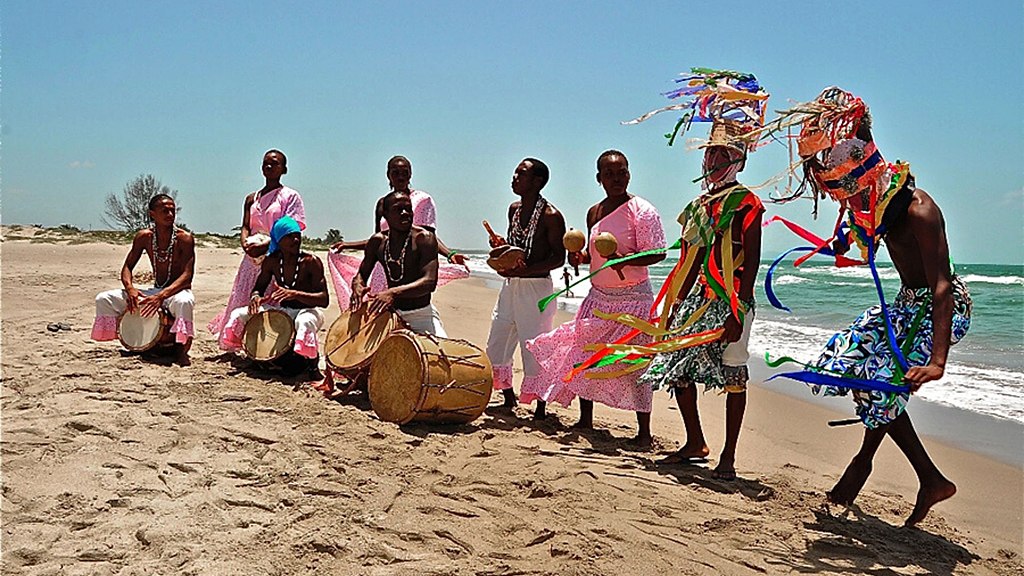
A group of Garifunas performing a Punta demonstration at the beach. Photo by Alvaro Dia, via Wikimedia Commons.
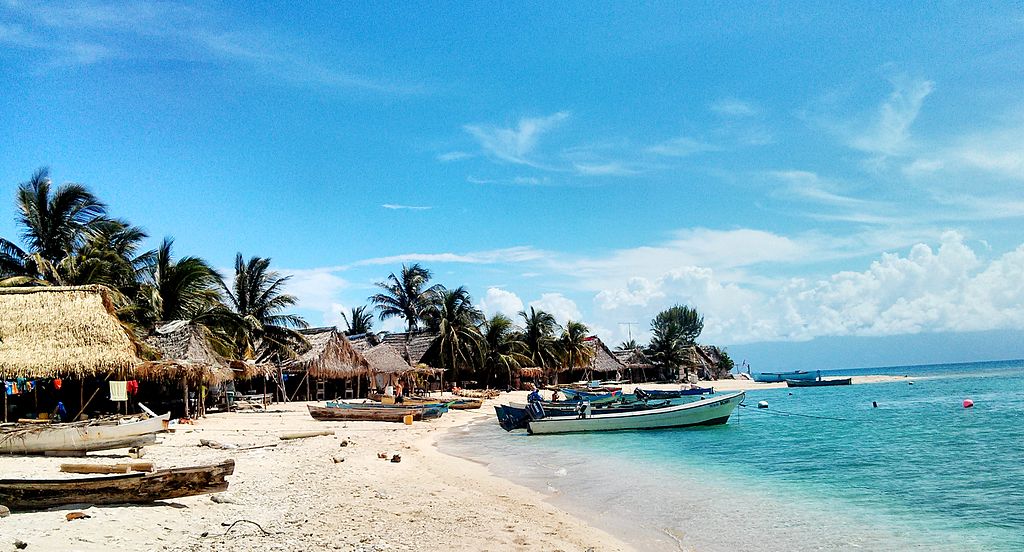
A Garifuna community. Photo by Dennis Garcia, via Wikimedia Commons
In 2015, the Inter-American Court of Human Rights (IACHR) issued a landmark sentence that found the state of Honduras had violated the territorial rights of the Triunfo de la Cruz Garifuna community by expanding urban developments and selling their ancestral land for industrial and tourism purposes. The state was ordered to return the land, make reparations and ensure such violations were not repeated.
A decade on, the state has failed to comply with the ruling, despite a commission created by the Castro government. Instead, more land has been bought and sold unlawfully, while community leaders have been subjected to racist smear campaigns, murdered and disappeared. Local entrepreneurs, international corporations, alleged drug traffickers and high ranking elected officials have been implicated, but impunity remains the norm.
In a recent perverse twist, multiple Garifuna leaders have been charged with usurpation or land invasion after peacefully reclaiming some of the illegally occupied ancestral land.
“The Garifuna people have waged a permanent struggle to demand compliance with the IACHR court ruling but the state seems incapable and unwilling to combat the national and international corporate powers who have a tight grip on this country,” said Miranda, founder and coordinator of the Black Fraternal Organization of Honduras (Ofraneh).
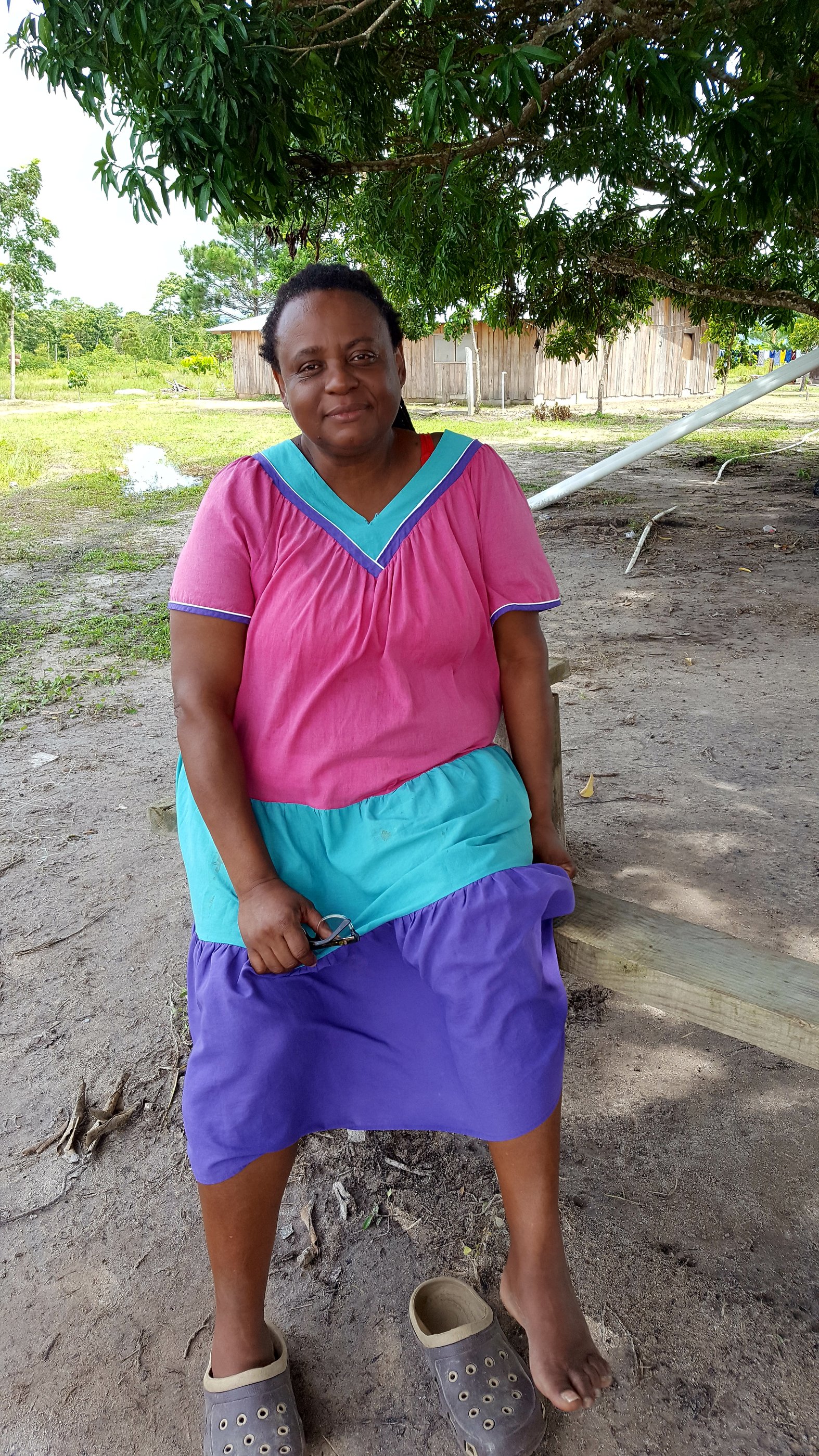
Miriam Miranda, founder and coordinator of the Black Fraternal Organization of Honduras (Ofraneh), in 2017. Photo by Nina Lakhani.
“Not only has the state been unwilling to comply with the IACHR, but it has also failed to protect the communities in their futile efforts to enforce the ruling,” said Caleb Navaro, a lawyer representing Garifuna communities.
Despite several international court rulings in favor of Indigenous land rights, the country’s business elites—with the help of judges, prosecutors and elected officials—have made progress in legitimizing land grabs.
Over the past decade, thousands of mostly poor people from dozens of communities have been evicted without due process and falsely charged with usurpation, or land invasion, thanks to a litany of shady legal reforms.
Around 70 miles north of Berta Cáceres home in La Esperanza, for example, dozens of Lenca people have been living in shacks on the side of the highway near Lake Yojoa since June 2023, when a judge authorized their eviction as part of an usurpation case against the Cacao community. The displaced community has been plunged into poverty without access to the land, located on the other side of the highway, which they have farmed for more than 60 years.
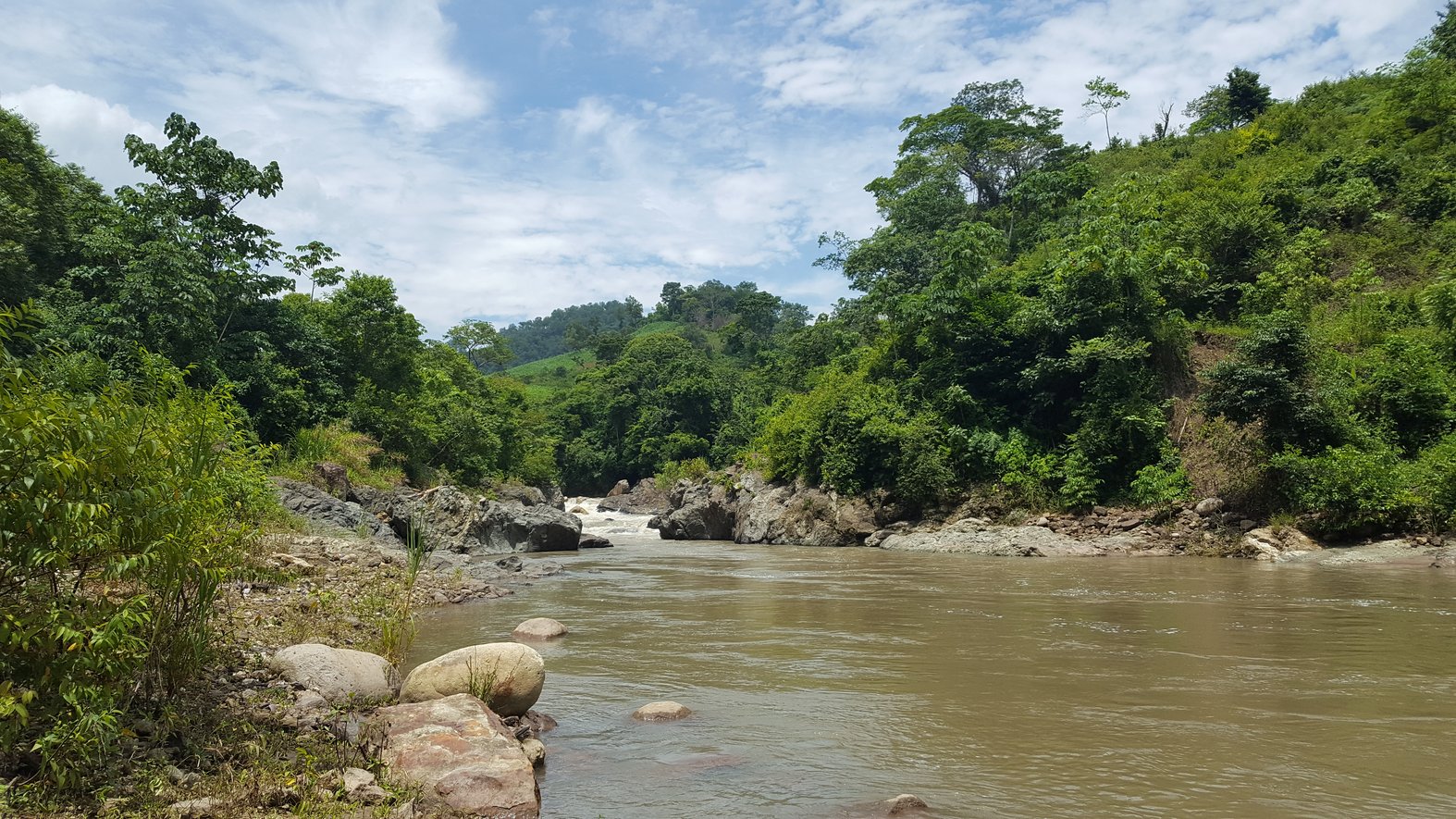
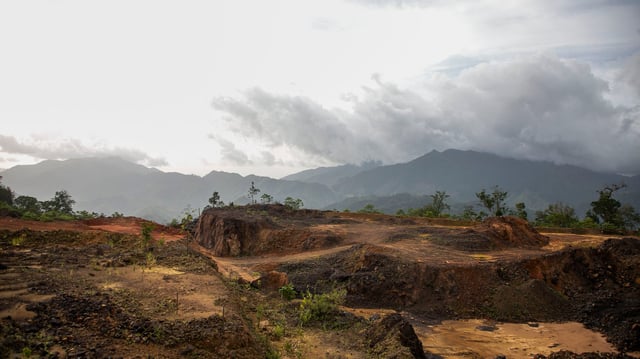
The River Gualcarque, considered sacred to the Lenca people, where the Agua Zarca dam was illegally sanctioned to be built. Photo by Nina Lakhani.
“We’re poor people and don’t have all the papers, but we have always lived on that land. It is our territory,” said Berta Lidia Izaguirre, 55, who was among 11 community members accused (and charged) of land invasion by businessmen they had never previously laid eyes on.
The 2020 penal code, condemned by UN experts as undermining the rule of law, reduced penalties for corruption and drug trafficking, while cracking down on free speech and legalizing so-called “express evictions” for usurpation, which now carries a maximum sentence of nine years.
In essence, any private individual can lay claim to a piece of land and then accuse the person currently living on that land of usurpation. A new land registry claim can be enough to evict an entire community within 48 hours unless they also have an official land title, which are rare among rural and Indigenous communities.
“Usurpation has become a perfect crime for corporations and entrepreneurs to carry out the perfect eviction and claim Indigenous lands,” said Tabora, who represents multiple displaced communities. “The criminal case isn’t the point, it’s about getting the land.”
There was a notable reduction in usurpation evictions—and state repression against land and environmental defenders—during the Libre government. But the Castro administration did not reform the draconian 2020 penal code that further criminalized protest, and also imposed fines and prison sentences on journalists, as well as those who reproduce their content.
After the coup, Honduras became—and remains—one of the deadliest countries in the Americas for journalists, with at least 14 killed in the past decade, according to Reporters Without Borders (RSF). In fact, Honduras currently ranks 142nd in RSF’s global press freedom index compared to 137th in 2016, and the mainstream media is now even more concentrated in the hands of politicians, businessmen and religious groups.
“The last decade has been one of regression, deterioration, and above all, the imposition of a predatory model and way of life—a voracious, murderous system that destroys life-sustaining natural resources,” Miranda told Drilled.
Berta no murió, se multiplicó
Berta Cáceres was a courageous leader with a rare talent for explaining local struggles in the broader national, regional and global context. She never turned her back on injustice but also believed joy was an act of resistance. Leaders like Cáceres do not come along often. Her murder wasn’t unique but it was emblematic. It was a crime against her family, the Lenca people, Honduran society and humanity.
Over the past decade, people across the world have paid homage to Cáceres with murals, poetry, awards, parks, boats, and street names dedicated to her from Dublin to Montreal to Buenos Aires. Thanks to the Castro administration, her face even appears on a Honduran bank note (200 Lempiras). Her family insist that Berta no murió, se multiplicó—Berta didn’t die, she multiplied—and it’s clear that her life and death continue to inspire.
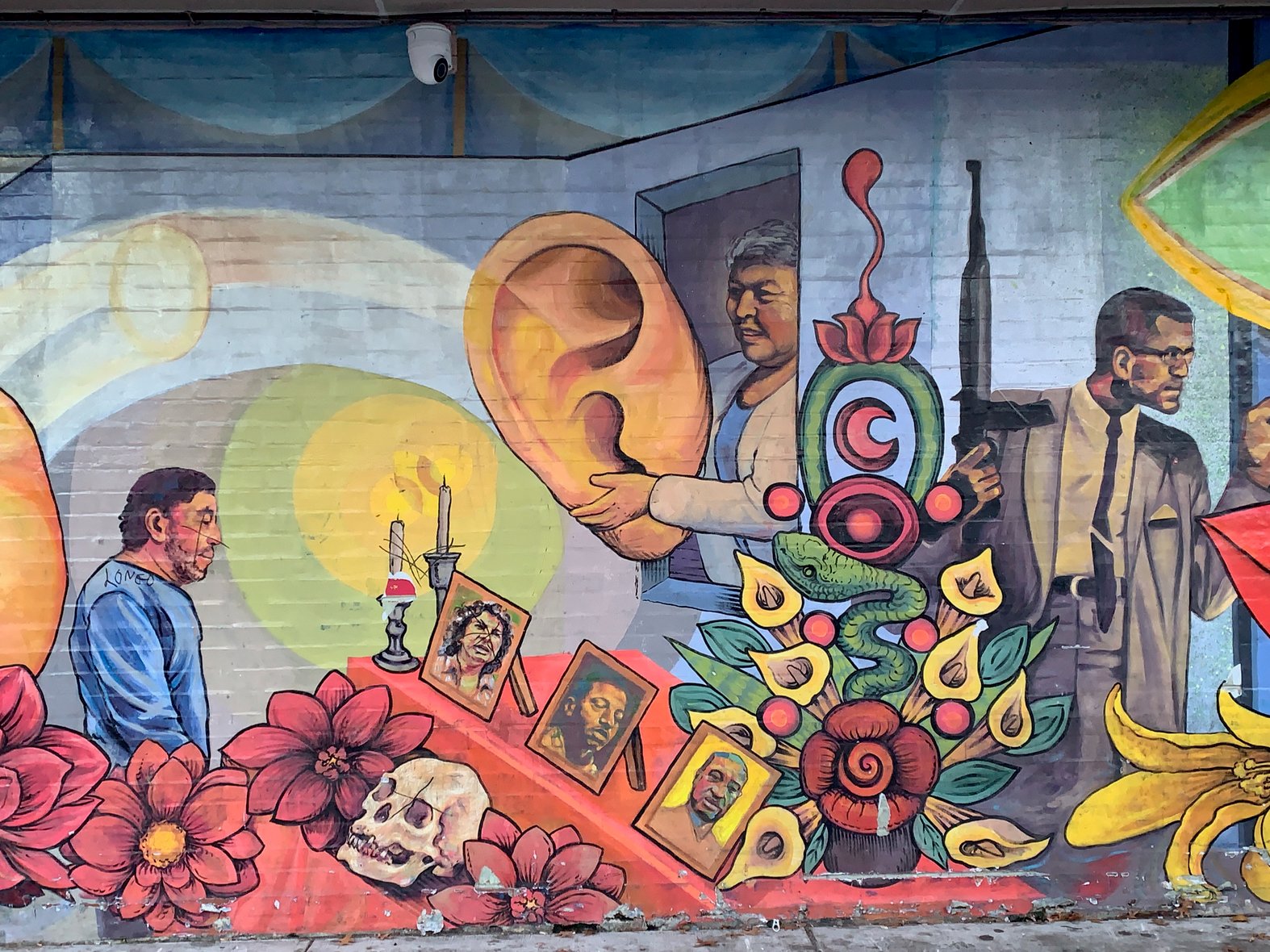
Lost Leaders mural in Queens
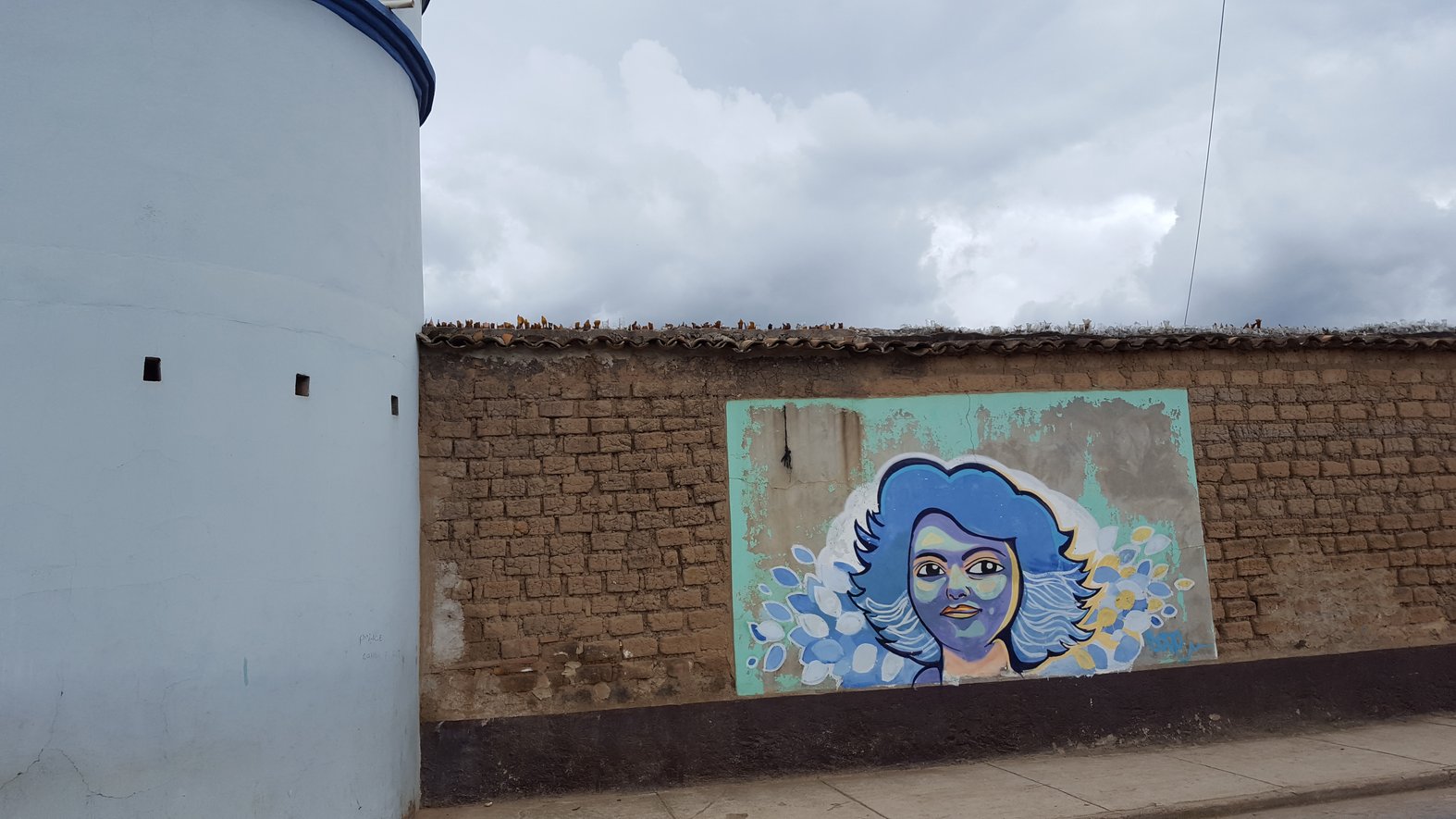
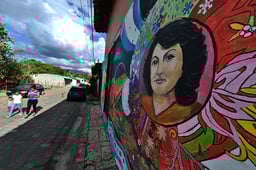
Mural honoring Berta in La Esperanza
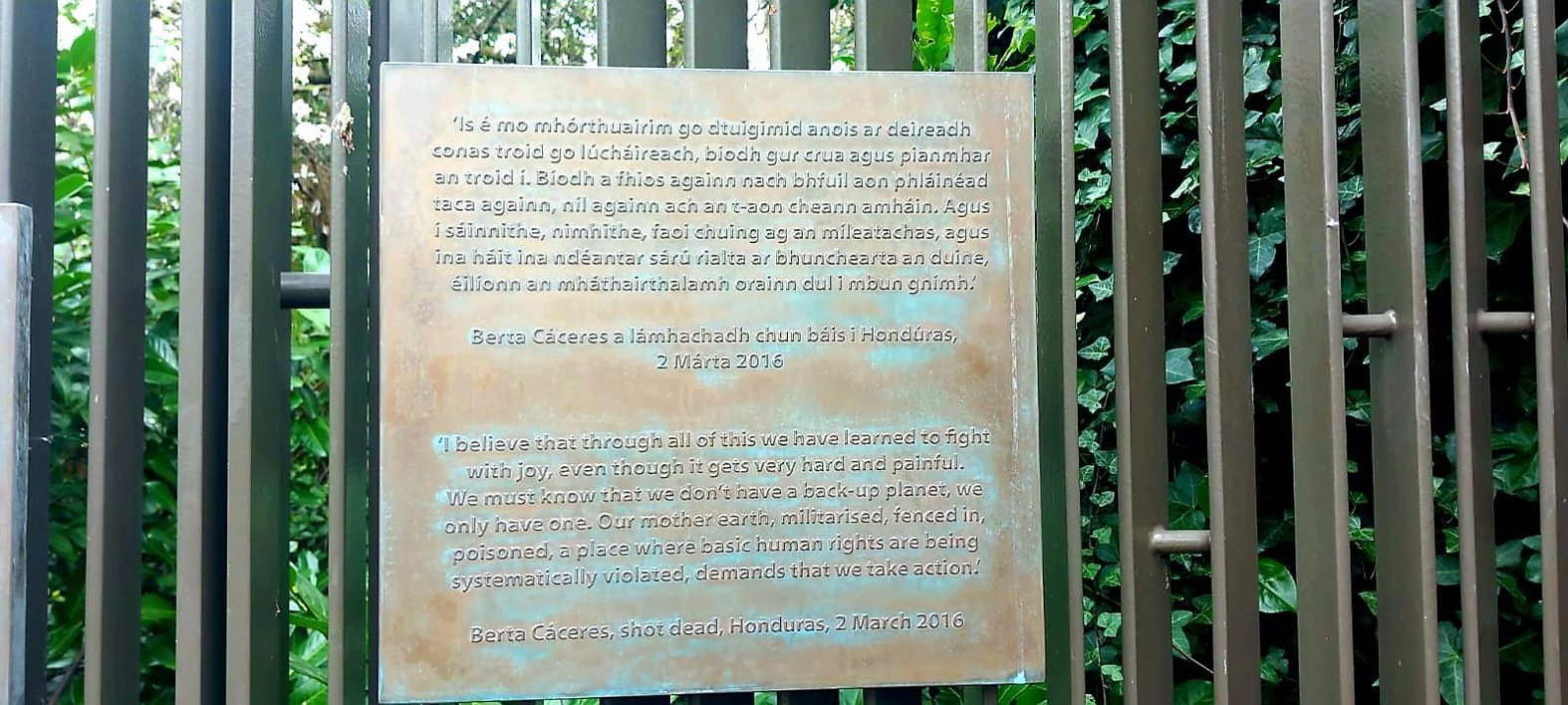
Memorial in Dublin
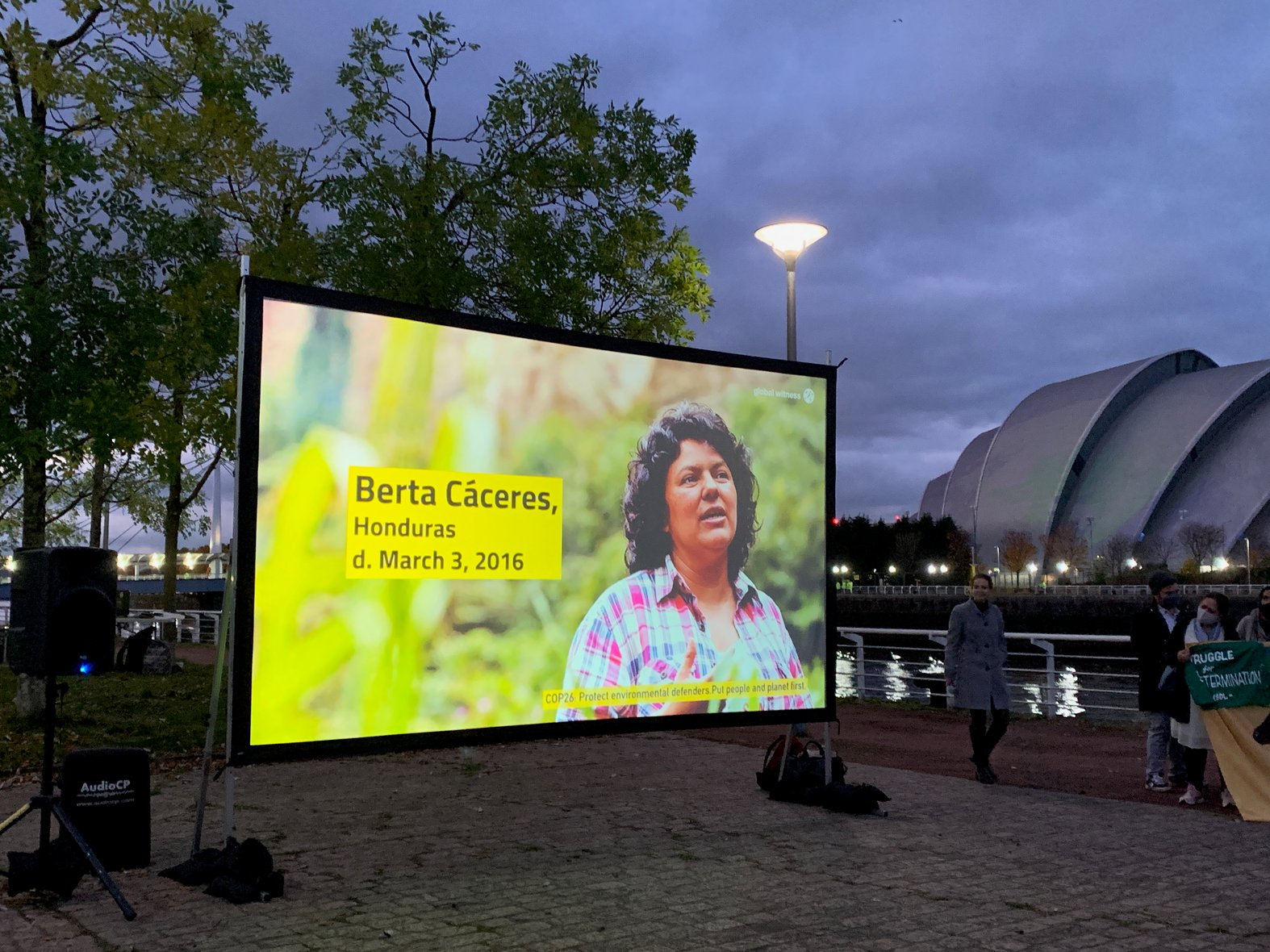
Shrine honoring Berta at COP26 in Glasgow
But the environmental and social movement was undoubtedly weakened by her loss.
“The focus for all of us after Bertita’s death was to publish, denounce, demand justice, commemorate, and maintain her presence in the media, in public opinion, in the movements. So many other processes fell apart that as a movement we're only now starting to pick up again,” said Castro, founder of the Mexican environmental nonprofit Otros Mundos (Other Worlds) Chiapas.
Castro, who was the only eye witness to the crime, continues to suffer physical and psychological consequences from the attack and subsequent effort to blame him for the assassination of his friend. “It was a miracle I survived because it’s clear the plan was to kill us both. Little by little over the years, I've been regaining my spirits, my enthusiasm, and my work, but I lost a lot. We all did.”
The past decade has been particularly difficult on Miriam Miranda, who once told me she and Berta were closer than sisters, more like accomplices, and has largely retreated from public gaze.
“It is hard having to change one's life so much. It can feel like being imprisoned, but there is constant danger, and constant anxiety trying to ensure the same thing doesn't happen to me as Bertita. But we can’t let those trying to silence the defenders win. The struggle for the land means fighting for our lives.”
Nina Lakhani is the author of Who Killed Berta Cáceres?: Dams, Death Squads, and an Indigenous Defender’s Battle for the Planet, published by Verso in 2020. It is also available in Spanish, Italian and French.