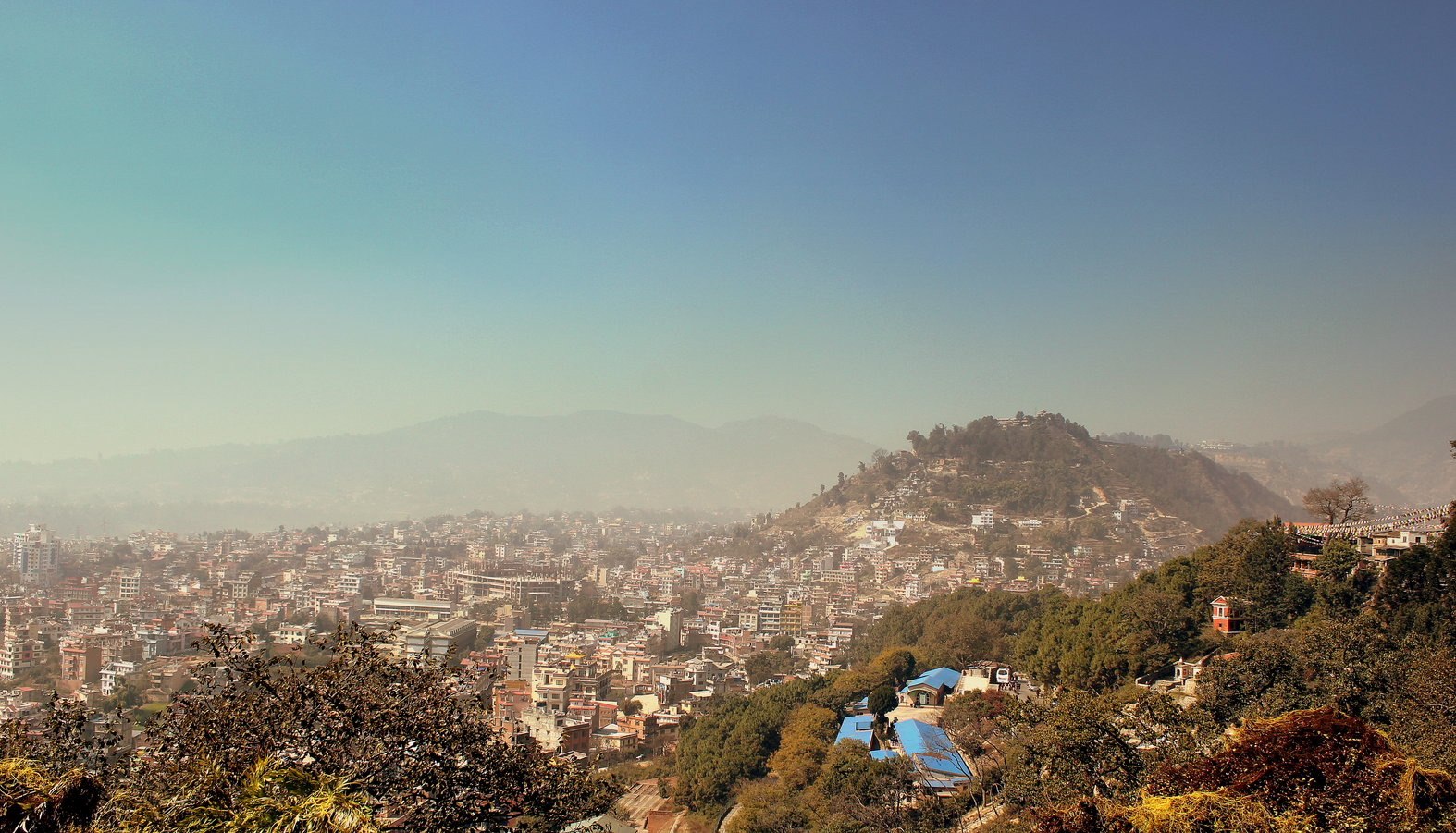
Darkness falls across an entire four-star hotel, situated on the outskirts of Kathmandu Valley. It’s dark for at least 30 seconds before the generator kicks in and the light returns. This happens almost every day at the hotel, up to four times a day, for a total of 90 minutes of blackouts on a typical day. They’re so abrupt and so frequent that the visiting tourists and other guests of the hotel find it awkward, according to the general manager, who says he knows it’s a problem, but it’s one he just can’t solve.
The general manager declined to speak on the record, but provided a daily record of power outages from August 28 to September 5. According to that record, the power goes out about twice a day on average. The hotel burns nearly 500 liters of diesel per month running its generator during these outages. The diesel bill for the generator hovers between Rs 70,000 to Rs 80,000 per month (approximately USD $460 to $530) and the general manager estimates the same amount of electricity coming from the grid would cost about 10 percent less than the dirty fuel. “Intermittent power supply also reduces the life of air conditioners and other appliances and incurs additional burden,” the manager said.
While the hotel struggles with unreliable electricity, the country’s power utility Nepal Electricity Authority (NEA) boasts a record 1,000 MW of surplus hydropower generation this season and has no official maintenance notice to justify outages at the hotel. It’s not a unique situation. A recent government study to address the problem of recurring power outages in Nepal shows that the area in Lalitpur district ranked second in electrical tripping with 162 such incidents in a year. Nonetheless, Rajan Dhakal, a spokesperson for the Nepal Electricity Authority, claimed such frequent power outages are unexpected in the city and promised to look into it.
But it’s not just one district, the entire country struggles with this problem. Despite a surplus of hydropower, Nepal is awash in stories like this, with businesses and residents across the country dealing with unreliable electricity—and the costs, air pollution and noise pollution that come with the use of generators to deal with it—thanks to a combination of an outdated grid, lack of distribution infrastructure planning and policy decisions that prioritize exports over domestic energy supply. The existing distribution infrastructure is hardly sufficient to meet today’s electricity demand. If the country aims to treble per capita electricity consumption to 1,500 kWh by 2035, it needs to undertake demand-side planning and treble its distribution infrastructure capacity accordingly.
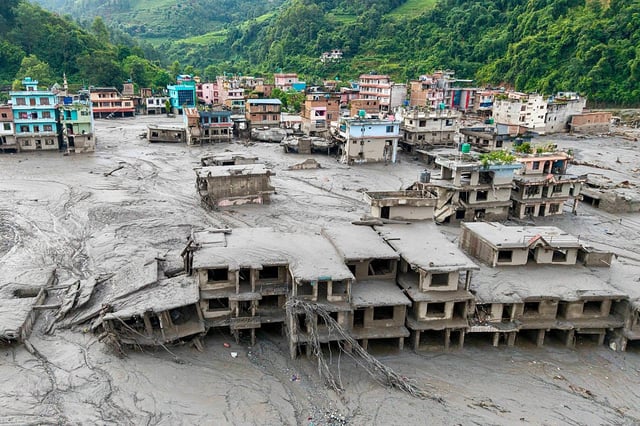
It’s a microcosm of the on-the-ground complexities of the energy transition, one that seems particularly relevant against catastrophic flooding triggered when melting permafrost and a melting glacier came crashing into the country’s hydropower system. Climate skeptics argued alternately that climate change had nothing to do with it (it did, though wasn’t the sole cause) or that Nepal would have fared better had its grid been less dependent on hydropower. But Nepalese investments in hydropower and renewable energy over the past decade were a reaction to far worse outages caused by its previous reliance on fossil energy. The situation has improved dramatically, but now the country faces a new problem, one endemic to the energy transition: its unreliable distribution system causes supply issues.
A new domestic energy supply
Over the past decade, Nepal made ambitious commitments to the United Nations to transition away from fossil fuels, but the transition won’t just help the country meet climate targets, it’s also made the power supply more reliable. From 2008 to 2016, Nepal experienced acute power shortages, causing outages of up to 16 hours a day. A World Bank study estimated that the country could have lost US$11 billion value of GDP due to that decade—an amount almost equal to the country’s entire GDP in 2008. India’s 2015 blockade of Nepal also made legislators realize the inherent risk of dependence on fossil fuel imports. The country generated less than 900 MW of electricity at the time, and the blockade disrupted every aspect both of citizens’ lives and of the country’s industries. The private sector suffered losses totaling a staggering Rs202.5 billion ($1.96 billion) as a result of the blockade, according to one study.
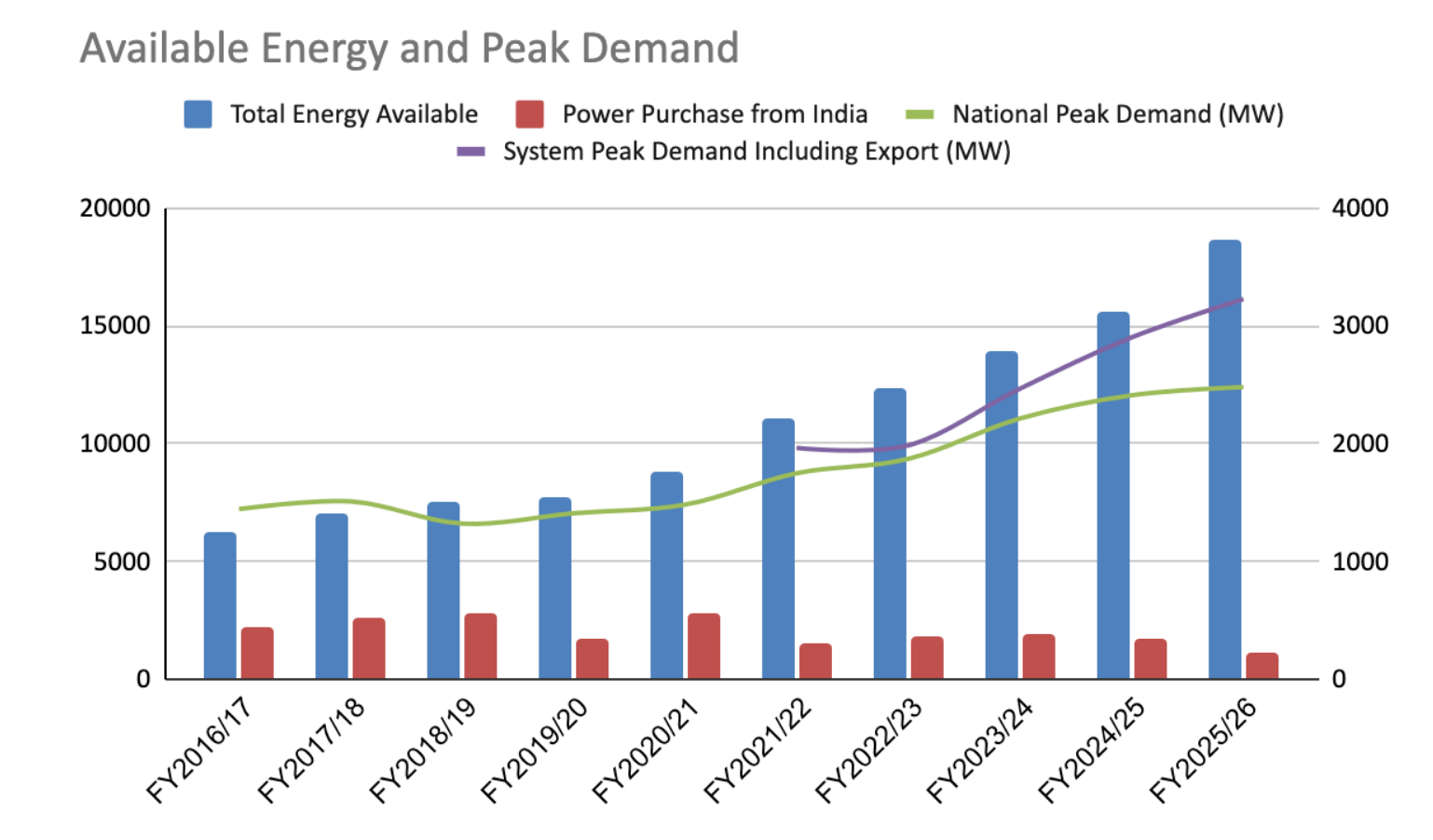
Just ten years later, Nepal has generated a surplus of clean electricity during summers for the past five years, with excess power hitting nearly 1,000 MW this season. “Today’s electricity generation is because of the lessons learned from the long power outage and the blockade and the private sector has played a big role on it,” said Shailendra Gurugain, chairman of Samriddhi Energy Limited and past president of the Independent Power Producers’ Association, Nepal (IPPAN). Private sector generation of hydro and solar power now accounts for 57 percent of Nepal’s total annual supply of 18,624 GWh.
Exports versus energy security
The country generates so much energy that it now exports surplus power in the rainy season. Most of the hydropower projects are designed as run-of-the-river or have no storage facility, so when the snow-fed river flow dwindles during winter and generation decreases, Nepal still has to import electricity to cover the shortfall. Despite the policy of replacing fossil fuels and significant growth in electricity generation, Nepal has still seen an 11 percent growth in the volume of its petrol imports over the last five years while imports of diesel and LPG (propane) have remained relatively static, according to our data analysis of fuel imports.
Growth in fossil fuel consumption has flattened in recent years, partly due to electricity availability and the growing adoption of electric vehicles (EVs), according to professor Shree Raj Shakya, head of Tribhuvan University’s Center for Energy Studies. The sales of electric vehicles has seen significant growth in recent years, thanks to electricity availability and lower import taxes compared to internal combustion engine (ICE) vehicles. Nepal has the world’s second-highest rate of electric vehicle adoption. “However, the government’s tax hike on EV imports and the introduction of new taxes on electricity consumption this year could slow the adoption of EVs and discourage electricity consumption,” said Prof. Shakya. Shakya further said that there is untapped potential of replacing fossil fuel import with surplus electricity including adoption of electric cooking and mass electric transportation and reliable electricity supply in industries to stop fossil fuel consumption.
Today, the country's annual fossil fuel import bill of about $2 billion exceeds its total export earnings.
Meanwhile Nepal’s energy export goal of 15,000 MW by 2035 is more than its target of consuming 13,500 MW at home. Three cross-border transmission lines are currently being built in the country, including one backed with U.S. grant funding, but almost no priority is being given to reliable domestic electricity supply and distribution, according to Mohan Das Manandhar, chair of Nepal Energy Foundation. “The government has chosen the easy tasks of exporting electricity over the very important task of consuming more at home for economic development,” he said. Opposition MP Basana Thapa has accused the government of misplacing its priorities by focusing on energy exports while citizens continue to face erratic power supplies despite an available surplus.
Speaking in parliament on August 18, an opposition lawmaker criticized the government for erratic electricity supply and low voltage, arguing that export is prioritized over domestic consumers. In response, Energy Minister Biraj Bhakta Shrestha did not deny the problem, but blamed poor distribution networks and defects in the transformers. Shrestha did not specify any actions the government is taking on the matter, but reported to parliament that he recently sent a report to NEA, asking them to implement various suggestions to address the problem.
The minister’s report, which Drilled obtained from a government source, has some details about two electricity distribution centers out of 12 in the capital city and ongoing works of distribution system reinforcement plans. We showed the report to a retired manager from Nepal Electricity Authority's distribution department and the manager said “the report is conventional and fails to detail real problems to enhance power supply reliability.” The manager, who spoke on condition of anonymity, explained two major problems. He said, “No inter connections among the three major grid substations in the city means there’s no back-up when a substation has deficit power and if any problems occur at a point of a long-stretch of distribution line, no alternative feeders are available at most of the locations. This leads to long hours of power cuts until technicians address the issue physically.”
NEA spokesperson Dhakal explained a number of reasons behind unreliable supply. “To address the problems, we need to invest in infrastructure as well as follow preventive maintenance and cost matters for this but we don’t have cost effective tariffs,” he said.
Manufacturing bears the brunt
The impact of unreliable electricity is particularly acute for Nepal’s manufacturing sector. Drilled spoke with three large industry managers in different cities including a steel factory and a cement factory and they told almost the same story. CEO of Kathmandu Steel Pvt Limited Keshav Raj Pokhrel said that their plant based in Nawalparasi West, faces low voltage problems during winter season when the electricity is imported from India. “Officials at the Nepal Electricity Authority give us notice of low voltage lasting up to 45 minutes or an hour. We have to make emergency arrangements for the melted iron and it may result in significant loss,” said Pokhrel.
Over half of Nepal’s industrial facilities use generators due to unreliable electricity, according to a survey report published in January by Confederation of Nepalese Industries, an industry trade group. The report also revealed that most of the complaints about this problem come from the manufacturing sector. For these businesses, the cost of electricity from diesel generators is at least double that coming from the grid, according to manufacturers, representing a significant cost that would be cut if the grid could provide reliable energy.
The shortage of propane—frequently used as a cooking fuel in the country—since the first week of August may have contributed to more erratic electricity supply during peak hours because more households were using induction stoves.
At least two department stores told us that the sales of induction stoves have at least trebled since the propane shortage hit, spurred by the U.S. and Israel’s invasion of Iran. A salesperson at Bhatbhateni Department Store in Bhaktapur told us that daily sales of induction stoves have jumped to 15 units from an average 3 to 5 units per day. But Dhakal insisted that the utility has “not seen much demand in our system yet. The country needs big industries to consume our surplus energy.”
A complicated balancing act
Meanwhile, the energy export market continues to grow. Nepal recorded an electricity export of 3,965 GWh and netted 18.75 billion rupees (roughly $143 million) in the last fiscal year ending mid-July. In September 2023, Nepal inked a deal with India for exporting 10,000 MW of clean electricity in the next ten years, but subsequent bilateral talks have stalled out over essential questions around pricing and logistics so the deal has yet to become a reality. Nepal’s energy trade with Bangladesh, meanwhile, is limited by India’s reluctance to support it.
“If India declines to buy our electricity or the price in India goes down, we have no way out and electricity consumption is important for economic development in the country,” Manandhar said. Experts suggest industrialization is important to expanding Nepal’s domestic energy consumption.
But the government does not seem to be paying attention to the experts. In July, the government introduced a 5% tax on electricity consumption, a move consumer activists say has discouraged higher electricity use. Former Energy Minister Kulman Ghising, a revered manager at the Nepal Electricity Authority for his role in ending the country’s acute power outage in 2016, criticized electricity taxation and suggested the government should lower the tariff to increase consumption.
“When the generated electricity cannot be consumed domestically in large-scale industrial production, it has had a negative impact: job creation, goods production, and commodity export all decline,” wrote Assistant Professor of Statistics at Tribhuwan University Chuda Prasad Dhakal, in an opinion piece recently.
Clean electricity, which is cheaper, could give domestic industry a competitive edge and create jobs at home for Nepalese youth. Each day, over 2,000 young people leave the country for Malaysia and the Middle East in search of jobs.
Against a backdrop of this national brain drain, coupled with low electricity consumption, NEA fears it will have to pay more for electricity produced by independent power producers than it earns selling electricity in the near future. The single power buyer in the country has almost stopped signing new Power Purchase Agreement (PPA) with the hydropower companies except for small plants. The power utility this rainy season has been asking operators of power plants to stop their turbines or run at a low capacity simply because there’s no demand in the system.
The installed capacity of such PPAs has declined by 29 percent in the last fiscal year compared to the previous year, according to PPA data. However, the share of solar energy in those PPAs has increased significantly over the past three years from a mere 3 percent to 95 percent.
Solar currently makes up less than 3% of Nepal’s total electricity generation. “We can go to solar for up to 15 to 20 percent to manage the energy mix,” said Shree Raj Shakya, head of the center for energy studies at Tribhuvan University.
Private companies have long lobbied for permission to enter the electricity trading market. “The government’s monopoly on electricity trading should come to an end,” said Shailendra Guruagain, IPPAN’s past president. Opening up electricity trading to the private sector has long been discussed and government policies and programs have mentioned it but it hasn’t yet materialized.
Amid uncertainty over the market, interested independent power producers with proposals for more than 9,000 MW of projects have been either suspended or delayed, according to IPPAN. However, the government’s energy forecast says that the country will need 13,500 MW of electricity by 2035. Guragain suggests the Government of Nepal learn from neighboring India and Bangladesh and focus on the domestic energy market, expanding consumption and generating and distributing more energy locally.
Energy expert Manandhar stressed the need to encourage more industries and also foreign investments to expand energy consumption in the country as well as the need for Nepal’s clean energy to replace fossil fuel use as much as possible in the country.
Meanwhile, the August 26 floods knocked out around 10% of installed power from the national grid, prompting a debate about whether Nepal should rethink its hydropower-first strategy or adopt better-engineered plants. Energy experts say hydropower is still the country’s best option for economic development. “We need to design the plants resilient to floods and, most importantly, install early warning systems and follow robust emergency evacuation measures,” former minister Ghising says.