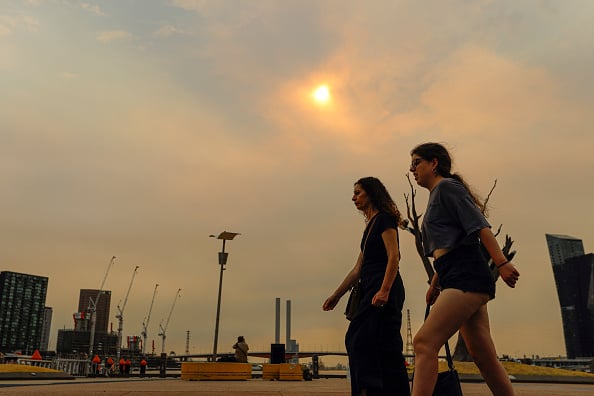
Deadly bushfires are once again ravaging Australia, even as floods inundate other parts of the country. It’s all part of the climate whiplash scientists have predicted for decades, and is a terrifying reminder of what’s to come as many Australian politicians backpedal on climate.
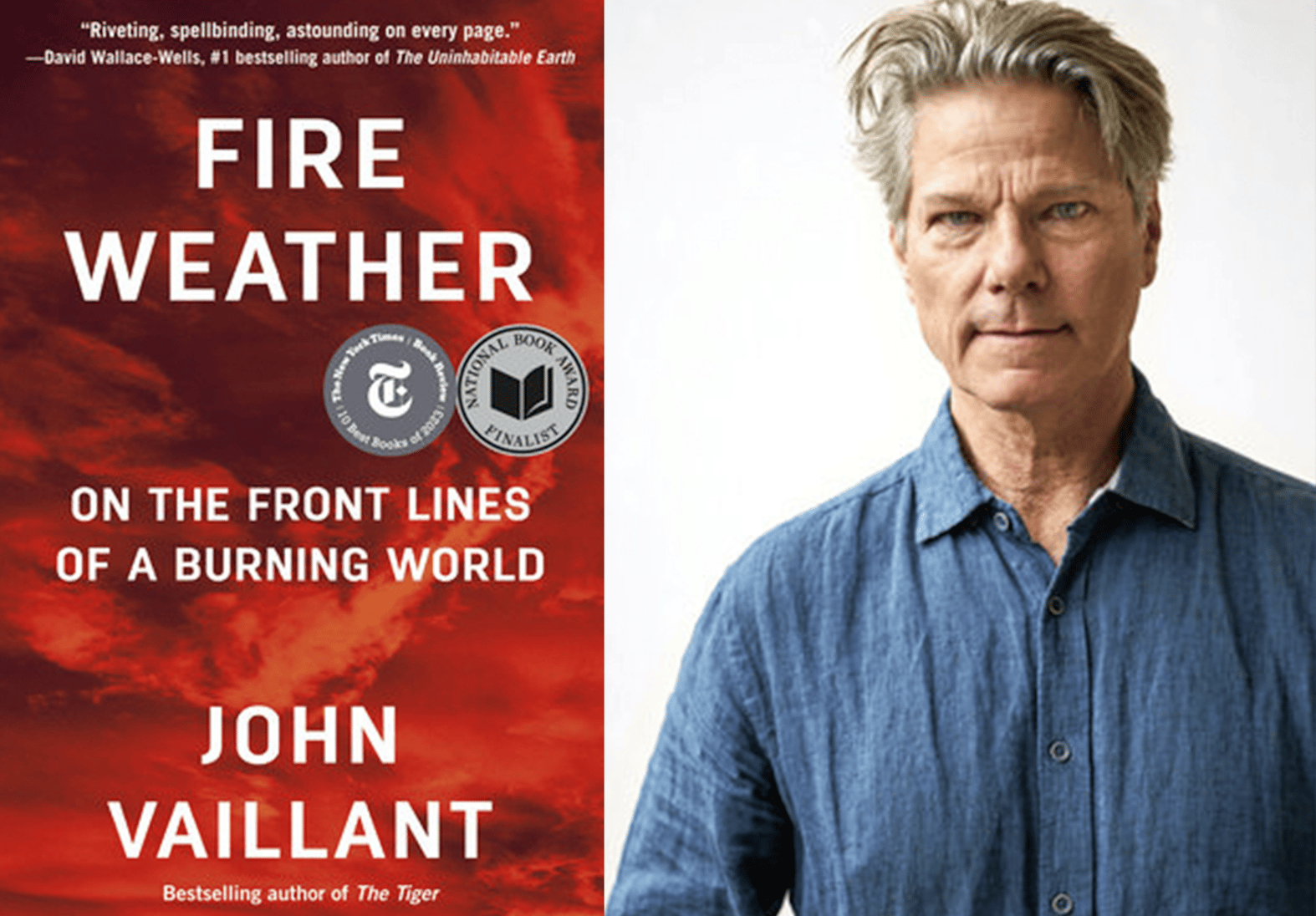
Following is the transcript of a conversation with Canadian author John Vaillant from last year’s Byron Writers Festival about his book Fire Weather. In it, Vaillant tells the story of a Canadian oil sands town upended by a catastrophic fire, and what it tells us about the world we’re living in.
Prefer to listen to this conversation? Check out today’s podcast episode here, or wherever you get your podcasts:
Royce Kurmelovs: Hello and welcome to the 2:00 PM session here at Byron Writers Festival. I am Royce Kurmelovs. I'll be your host for this session. I'm very excited to, to be here today with you to talk about this wonderfully written book that is both exquisitely written and as one writer for the New York Times, described it, unfortunately, exquisitely timed. The book is Fire Weather, A True Story from a Hotter World, which you can see here I'm holding up very conveniently.
The story it tells is about a Canadian oil town that experienced a catastrophic bushfire in 2016. And though it describes events a world away, for many of us here in Australia, it'll be deeply familiar. And for many people in this region, this powerfully drawn book is about many things.
It's harrowing, it's about fire, it's about climate change, and it's about the particular talent for self-harm that we as a species appear to show for ourselves. The author of this fine book is John Vaillant who is here with me today. And for those who don't know him, John is an author and a writer and has traveled halfway around the world to be here.
So could you please all make him feel warmly welcomed in Byron Bay.
And just before we get into it, just a heads up, we will be taking questions in this session. So in about 45 minutes, a volunteer will come around with a microphone. So if you have your questions, hold on to them till then we do ask that the questions are a question. And you know, again, keep them short so we can get as many in as possible to kind of get as much good information as we can out.
And if you want to have more of a conversation with John, you are more than welcome to do so over at the book signing tent with a copy of the book after the show. So John, I wanted to kind of open this conversation with you by asking the question. I mean, there are many fires in many places, but what drew you to this one?
John Vaillant: Yes. First of all, I, I would like to say, thanks to the Tasmanian walking company and also to all of you, uh, I'm really glad to be here with you. And also, I have to say off the top, I feel rather sheepish coming to Australia to talk about fire, uh, when Australia has kind of written the book on fire in many ways.
And, and a lot of us are up north are, are learning from you and, and watching and fascination in horror, you know, as, you reach new heights of flammability, but we're keeping pace up in Canada. We're doing our part, and, Fort McMurray, which caught on fire in May on May 3rd, 2016, and drove the largest, most rapid evacuation due to fire in modern times.
Caught my attention before any of us knew that, really because it disappeared from the face of the earth for a while. And I was, I'm not a climate journalist. I, I write about, every book is about a different subject. I've written about a man eating tiger in Russia and a botanically unique tree in, in British Columbia and other things.
But, uh, so fire was not really on my radar and I was working on a novel and in Italy at a very swank writer's retreat and made the mistake of looking at Twitter and this, uh. Petroleum hub of Canada, Canada's the fourth or fifth largest petroleum producer in the world, and the hub of that industry had completely disappeared beneath a 40,000 foot tall pyro, cumu, Nimbus fire Cloud.
And that was on May 3rd, 2016, and nobody knew there were 80, 90,000 people in there. You can see the cars streaming out. There's only one road out. Uh, they were streaming out like ants to the horizon and nobody knew who was left in there. And nobody knew for days. It was really frightening, kind of at a national level.
It’s a nationally important city. Um, it is home to the highest wages, in the whole city. I think you have some of that. Here, there's, you have a great name for it,, the pilborough, the, uh, and, and, and the name for the people who, uh, make spectacular wages working there. But ah, yes, the ca cash out bogans, I think is the greatest.
You're looking Yeah. The cash out Bogans. Well, this is what Fort McMurray is famous for. And, um, the median household income there, even after a global downturn in petroleum, uh, prices was $200,000 a year, making it one of the wealthiest municipalities in all of North America. And that's including, you know, Marin County and Westchester, New York.
Uh, so it's a very, very powerful place. And the idea that it could be wiped off the face of the earth in an afternoon was deeply threatening and terrifying. And, um, it. I dropped the novel and started paying attention. So,
Royce Kurmelovs: so on that, so just to contextualize this place a little bit more for people in the audience who may not be familiar.
I mean, we in Australia have the coal industry, we have the gas industry, we have centers of, you know, mining and extraction such as the Pilbara, other places. But am I right that the specific industry on this place was the tar sands? Yes. So, so can you just explain what they are
John Valliant: The tar sands are a total anomaly. There are tar sands in Venezuela also that produce petroleum, but tar sand is bitumen soaked sand and bitumen. If you don't know, it's what you seal your driveway with. It's what you seal a house foundation with. It's a tarry liquid substance. You, you can't really burn it, you know, unless you heat it way above normal combustive temperatures.
It's not oil or gas in the sense that most of us understand it. And it has to be mined out of the ground. And this industry is, has altered basically destroyed a thousand square miles of the northern boreal forest. And as they use gigantic shovels, much like coal mining to dig this stuff out.
And then in order to process it, you have to melt it with billions of cubic feet of natural gas just to render it into a liquid form that can then be piped a thousand miles south to an American refinery for processing where it needs more natural gas to refine it. So it's, it is probably the least efficient, most environmentally destructive most costly petroleum product, um, anywhere on earth.
And the math that makes it work is fuzzy, uh, to say the least.
Royce Kurmelovs: And how much, I mean, what kind of gravity does this place have because of the tar sands within Canadian politics and society?
John Vaillant: So, Alberta is the Texas of Canada. It's a very conservative state. It's pretty much owned by the petroleum industry.
Um, the petroleum industry really across most of North America controls a lot of the political discourse, to an unwholesome degree. The amount of lobbying hours and energy that goes on in Ottawa, the capital of Canada or in DC is shocking, uh, to say the least. And so Alberta is kind of a beneficiary of that.
I would say it's the way information is controlled there, it, it's sort of small f fascist and, uh, you know, I'm really sorry to say that, you know, I'm, I'm a Canadian. A generally proud Canadian, but you know, Alberta is a problematic place in complete denial about climate change like Texas, like Washington DC now.
And it's, um, uh, basically in servitude to this so far very lucrative, but extraordinarily destructive, uh, petroleum industry. And, uh, it creates a very weird tension where incredible wages can be garnered, but also the same, mostly men. It's about 25 to one up there. Men to women, uh, also live in enormous precarity 'cause they can be laid off at any time.
They get on the hook for a hundred and a hundred thousand dollars F-150 or a house, and then they can lose it all. And it's a very kind of hyper, and unstable. Situation that, uh, has a lot of casualties come out of it.
Royce Kurmelovs: And so when we, I, I wanna get you to explain what happened in a second, but just before we move into that, what you've described means that when we have, when we talk about this catastrophic fire in this place, there was a kind of poetry in what happened, right?
John Vaillant: Well, it's a strange circularity. So the, the, the bitumen industry of, of Canada, of Fort McMurray, it's, to put this in perspective, Canada is the, the largest foreign [00:10:00] supplier of petroleum to the United States. It's the biggest source of foreign exports, about 4 million barrels a day of diluted bitumen runs out of Fort McMurray, down into, American refineries.
It's a colossal amount of, potential energy. And so Fort McMurray is the biggest emitter in the country of CO2. And the idea of a, a climate enhanced wildfire that was behaving in ways no one had ever seen before. The idea that this fire would, uh, not only threaten but actually overrun the entire city, was kind of on the nose really.
And, uh, and yet it happened. And I think what was surprising is how hard it was, even when the fire was in front of people's faces, how hard it was for them to believe that this was actually happening and happening to them.
Royce Kurmelovs: And you do a very good job in the book of describing how and [00:11:00] when this began, that the fire kind of began over the hill as a distant problem not to think about.
Can you talk about how this began and, and what happened to this place?
John Vaillant: So the, the Boreal Forest of Northern Canada, it runs actually all the way around the world. So that, so Russian TGA is basically boreal forest. It continues across into North America, across Alaska, all the way across northern Canada.
It's the wettest biome on earth wetter than, uh, the tropical jungle. Huge rivers, uh, small ocean, you know, uh, inland seas, uh, of lakes, and it's terribly flammable. So there are species there just like here that will not regenerate unless they're burned. So it's normal for the boreal forest to burn.
And this city is an isolated city, five hours driving from the nearest other major source of, assistance, which is Edmonton. Um, terribly isolated. And so fires [00:12:00] surround it every summer and every spring. And so there's this strange comfort with smoke plumes on the horizon, but also this. Magical compact that they seem to have that Well, the fire, yeah, the fires burn out there, but they'll never come into our city.
And that had worked for 50 years. And, um, nature, you know, is, is not here to, to make agreements with human beings or their ambitions. Uh, nature is here responding to, the forces that influence it. And what we had on May 3rd, 2016, was a temperature record for that day, broken by six degrees Celsius, and we had relative humidity of 11%.
And that, you know, might make your eyes roll back. And it, it, it's not an interesting subject to me until I started looking at where 11% humidity is normal and 11% humidity is normal in North America, in Death Valley in the [00:13:00] month of July, the driest, hottest place on the continent. And now those conditions have been transposed to one of the most flammable ecosystems on earth.
And we've had two years of drought. And so those trees didn't just catch on fire, they exploded into flame. And at about one in the afternoon at 10 kilometer wide, wave of fire, a hundred meters tall, swept into the city. And it came fast and burnt through the city day and night for a week. And it's, I think the, the only other fire that's lasted, that urban fire that's lasted that long is the Great Fire of London in 1666.
And those were some different conditions.
Royce Kurmelovs: And you, so how did the people respond? First off?
John Vaillant: Well, one person I interviewed, there's this [00:14:00] very heavy duty. Angry looking black plume on the other side of the river from where she lives. And there had been four other big fires around the city. People were already being evacuated temporarily.
Uh, this woman who lived right in the middle of town was hosting one of these evacuated couples, and they were taking pictures of the plume across the river, but it, it was a novelty to them. It was like a rainbow. Uh, and then she went off to work in her Porsche and, um, it was a bluebird day, unseasonably hot.
And so she dressed for the weather. She wore a skirt, which she hardly ever did 'cause it's a city of men. And being a woman working there is a very weird overdetermined experience. And it's a little bit like maybe being a, a female prison guard in a, in a prison. Like there's just unwholesome energy is directed at you.
And in spite of this, she dressed it in a festive way and went off in her Porsche. [00:15:00] And when she came back down into town for lunch, the city had disappeared behind this black and red curtain and she didn't even understand what she was looking at. It had happened so fast, it was so huge that a, what a lot of people experienced was disorientation.
They simply didn't have the space in their head to understand what was happening. So, and that was really interesting 'cause I, you know, I have my feelings about the petroleum industry and, and, and people who work in it. And there's a policy of climate denial in Alberta. And this wasn't denial, this wasn't people being obtuse.
This was something so enormous and, and outside their experience that they simply didn't have the cognitive capacity to, to process it in a rational way.
Royce Kurmelovs: It was just not computing. Wow.
John Vaillant: It, uh, it just, yeah, it basically kind of created more of a short circuit. [00:16:00] And so, and then, you know, Ash was falling, sky was completely orange.
Uh, by two or three in the afternoon. You could only function in the city with headlights 'cause it had turned black. It was so dark from the, uh, except for things that were burning. And, uh, and everybody realized, you know, not from the authorities, but from their neighbors saying, you know, my house is on fire.
You should probably leave, uh, then this. Very herky jerky, disorganized evacuation began, and with a miraculous outcome, uh, which we can get into, but
Royce Kurmelovs: I wanna talk about the evacuation in a second. But, I wanna take a step back because one of the things you do so well through the book is you draw out these moments of absurdity, almost this kind of sense where the reality people are facing does not compute with their expectation of the world as it should be.
Yeah. And I think one of the scenes that, and I wanna ask you about the authorities reaction in a second, but one of the scenes in particular I'm thinking about involves the authorities. And that was when, I think it was the, was it the fire chief when the radio station?
John Vaillant: Yeah. Yeah. The, the, um, [00:17:00] he's, uh, he's in the radio station and he's being, this is this, at 11:00 AM on May 3rd, massive fire outside of town.
And the fire chief and, and the, the head of the, the wildfire, uh, uh, service are on the air. Who's listening? Everyone's gone to work. You know, everyone's in school or so. To whoever's listening there saying, go to school, go to work. We've, we've got a, we think we've got a grip on this. All is good. And then right after that, around noon, a journalist, brought the, the wildfire guy into the radio station and it had a plate glass window that happened to look in the direction where the fire was.
And it, you know, it was a distant, you could barely see it, you know, at 10 in the morning. But by 1230 it had achieved crossover, which is, uh, basically where the humidity and the, and the temperature. Divide in a, in a particular way that really energizes fire. You have [00:18:00] that here in Australia too, for sure.
And so that was happening and the, and it, and it changed the quality of the smoke coming up behind these neighborhoods. And so we, we see the, the interviewer who described this to me in detail, you hear this guy, the wildfire manager just re repeating by, wrote these almost kind of platitude like, uh, anodyne directives about what people should do, which was don't do anything rash.
Go to work, do your thing. And we've got this in hand. But he's watching with his eyes as, as the smoke changes and he knows, he understands 'cause he is a wildfire person. He understands what's happening. And, and then he kind of cuts the interview and, and hustles outta there. And that's when, the first evacuation, notices is issued.
So we see people, even the experts, even the people in charge who understand the gravity [00:19:00] of the fire conditions, how dry it is, how hot it is, two years of drought, all of that things that people in Australia, again are very familiar with. And imagine the fire authority who, who understood that intellectually, but still couldn't make the leap to my God, this is energy that could take over the city.
And that's what you see kind of in real time as they start to put it together. And it's very hard to look at in retrospect, how could you not understand this when all the fire codes, the drought, moisture code, the temperature, the wind, everything was pointing to firestorm conditions. How could you not get it?
And I think intellectually they got it, but they didn't get it existentially. And so that's what we see in this kind of tortured way as this city, you know, one of the wealthiest in North America where. People have enormous agency and enormous confidence in their ability to meet challenges are overwhelmed by, [00:20:00] by an energy they've never encountered and have no equipment to respond to.
Royce Kurmelovs: And I wanna ask you about the evacuation, because there's a concept in sociology called elite panic, and it's where decision makers, you know, in, in decision making roles across the board, assume that when bad news gets broken, the average person will freak out and behave very badly. And, you know, and break the rules and, and chaos will reign.
But, and you have this, your description of the evacuation of these places is vivid and haunting and in, in some ways beautiful. Despite the awful circumstances you were describing. Could you talk about what happened as people evacuated from these neighborhoods as they evacuated from the city?
John Vaillant: So it's a petroleum town, so everybody is there to do one thing.
They might have different jobs, but it's all to serve the industry. It's a one industry town. It's a young town and a lot of them are living in very new developments. Some of these houses are only a year old, because it's a [00:21:00] supercharged, super heated economy. These houses are, you know, start at half a million and, and go up from there.
Again, with these new developments, you probably have this in Australia too, there's only one road in people haven't really thought about. Well, we should probably have an alternate exit road in case that one is blocked by fire. This is a really serious issue across a lot of the western world and, and places in general, especially where there's new rapid development going in.
And so, and they're realizing that their community is on fire in, in a very uneven way. And again, a lot of it is word of mouth and what's extraordinary is somehow everybody did the right thing. And, and that's statistically impossible. This is a city of 80 or 90,000 people where, you know, there are drug problems there, there are people who have worked, you know, pulled two or three 12 hour shifts.
People are sleeping at odd hours. This industry runs around the [00:22:00] clock. So you have people sleeping in the daytime and you also have many different languages and ethnicities there. And it's a kind of a melting pot. And so what the, to cut, to make a long story short, the, there was a 100% success rate, with the evacuation.
No one knew this for days. They kept, as they, you know, eventually started sifting through these burnt basements. Of which there were thousands, they were expecting to find bones or something. They never found any. And they, they, you know, they realized we had a 100% successful evacuation. And of course, you know, that's because it was Canadians, uh, who, and, uh, so, but here's the thing.
And so I could feel really, really good about that until I found out, uh, what a Canadian was, which made me feel even better about it because, uh, in 2016, the year of the fire, there was that census that revealed the median household income of $200,000 a year. [00:23:00] Also, the other thing that, that census revealed was that there were 88 0 first languages spoken in Fort McMurray in 2016.
So it's like Toronto or Sydney in terms of its international nature. And so you have the languages, the ethnicities, the religions. The different concepts of what risk is, the different concepts of what community is, and yet somehow between police, firefighters and citizens going door to door, every single person got out.
And it's amazing. And, and this does not, this is not happening in Turkey right now where we have a lot of fatalities didn't happen in LA where 30 people were killed, didn't happen in Paradise where nearly a hundred were killed didn't happen in Val Perso last spring where 200 people were killed. People generally die in Conflagrations, and there's been a [00:24:00] lot of 'em over the past decade.
And so Fort McMurray had this strange mercy visited upon it. And, and a lot of people work in the petroleum industry, so they're, they have fire consciousness. But that doesn't explain a 100% success rate. And I'm kind of hoping a sociologist will go up there and analyze the, the escape, because it's never been repeated and probably never will be.
And so Canada got a pass. And their response to that though was to rebuild the city exactly as it was and to incre increase petroleum production. And to be in complete denial about what happened.
Royce Kurmelovs: On the evacuation, you just, there are some incredible scenes.
For instance, the, people waiting in line in the car as the fire burned on both sides of the highway. And what you described was this incredible sense of solidarity. Yeah. And mutual aid. When the chips were down, people stepped up. Yeah. For instance, the journalist you spoke of, I, I think he, he stayed until the [00:25:00] very bitter end to evacuate to make sure the word got out as max the, the guy in the radio station was broadcasting to the last Yeah.
To make sure word got out. Yeah. And the other thing I wanted to ask you before, I wanted to kind of pull the camera back and asked some bigger picture questions in a second, but the final thing is the response, the firefighters, the people on the front line who were responding to this thing, you had an incredibly respectful, incredibly you, the incredible stories that you, um, spoke to these people about.
Can you talk about some of how they responded, how they had to learn on the fly in response to what was
John Vaillant: so, uh. No firefighter there had ever seen a fire like this. 'cause there really has never been a fire like that. We, uh, burning in, in Canada before, uh, through a community that was, um, generating the energy.
And so the very quickly radiant heat is the invisible heat that tells you not to touch the candle. And when you have a wall of flame a [00:26:00] hundred meters tall and 10 kilometers wide sweeping in it's projecting radiant heat of about 500 Celsius into the community. So it's desiccating everything. And if you have vinyl siding on your house, of course that's melting off.
And because the modern house here in Australia too is composed heavily of petrochemicals at that temperature, all those petrochemicals start to vaporize. And so what you have is a gigantic gas can. Full of flammable vapor, except that's your house, that's your neighborhood, that's your city. And so, and the other thing that's happening with that kind of heat is it's generating ferocious wind.
And so you have ember showers, you know, sort of 50,000 embers per acre landing on these unburned houses. And instead of the house catching on fire, because of all the vapor, the house explodes into flame. And so I, I got through to some [00:27:00] firefighters finally, you know, it's, that's a sort of a closed environment and it's kind of hard to break in there.
And I, I managed to do it with the help of another forest firefighter and talking with these guys, and they said, yeah, the houses were burning down in five minutes and I was sure that this guy was exaggerating, or, you know, like five minutes. And I, and I pressed him and I said, you know, five, five minutes.
Like, what do you mean I from. No fire on the house to fire in the basement with nothing standing in five minutes. And these are, you know, half million dollar houses that weigh 50 tons. You know, these are proper homes. And they began to modify their firefighting technique by, there's no way they could get to a house quickly enough when it's burning five minutes.
So they would basically figure out which way the fire was going, and then count down the houses and it takes 20 minutes to set up at a hydrant. And so they would count down four [00:28:00] houses and start on that house, and the previous four would burn. And in many cases the heat was so intense that they simply had to issue a mayday and just evacuate the fire trucks and everything.
And at to the point that they were leaving hoses in the hydrants. And which is something you never do. You know, it's like a soldier leaving their gun behind. You know, there's, there's certain things that are just ingrained into your behavior and you do not leave your, any equipment behind or obviously any of your firefighting crew.
And all they could manage to do was to get out with their trucks and they managed to, you know, the bring the civilians. And, and this is something I think that, you know, we hadn't hit yet, but Australians have where the firefighting operation turns into a lifesaving operation where all you can do is try to get as many people out as you can and you can't.
The, the structures are so involved with fire that there's nothing water can meaningfully do.
Royce Kurmelovs: And in describing some of those [00:29:00] responses and that learning on the fly, you also talk with great respect about kind of working class knowledge and experience. You talk about guys from trades who are on these fire crews, you know, using, like responding in real time to what was in front of them effectively.
Can you, like, where does, like, like, and a lot of people would miss that. Where does that come from?
John Vaillant: That, uh, one of the more interesting interviews I had was with heavy equipment operators who, so the, the fire burnt meant as for many days and nights, this is exhausting for firefighters. A lot of these guys didn't sleep for 48 hours, 56 hours, 72 hours.
So you're, you're hallucinating by then. But they're fighting for their city. There is no help coming. They're on their own in there. In many cases, their superiors don't even know where they are. They're kind of caught behind enemy lines trying to save a school or, you know, some piece of a neighborhood or, or maybe the, the, uh, airport.
And at one point the, the fire was moving so [00:30:00] quickly through this one housing development that they realize the only way they're gonna stop it to basically plow a firebreak through the neighborhood. In other words, tear all the standing houses down to keep it from going into the next neighborhood.
So I, this is day three or four. It's, you know, four in the morning pitch dark except for the fire. And these bulldozer and backhoe operators are brought in and told to plow every car they see in the street, through the wall and into the basement of the nearest house, and then plow the house down on top of it.
And these are, again, $600,000 houses that are literally brand new, finished that year. And so these guys are, are just kind of doing what they're told and they don't have protective gear on the fire is there raging and they're solidarity for each other. Their concern for each other and their bravery and their [00:31:00] incredible expertise under pressure was kind of unmistakable and fascinating.
And these are, you know, these guys had never been interviewed by anybody before. And, and they're humble working guys. Paid extraordinarily well, but pretty low key people. And it's just a fascinating section of the book. Hearing these guys who are experts with heavy equipment talk about the subtleties of heavy equipment under the most kind of terrifying and dangerous circumstances that they've ever operated in.
And so. That, just gave me a, a sense of who these people really were. And again, I'm, I live in Vancouver, it's kind of a lefty, liberal enviro scene that I come out of. And so I have a lot of baggage, you know, around the petroleum industry. And I quickly learned that that's not gonna help me in my reporting.
And so I really tried to leave as much of that behind as I could and just kind of approach these folks as [00:32:00] human beings with a, with a very specific kind of expertise. And that paid off handsomely because we get to meet people who normally nobody ever bothers to interview. And, and they helped save that city and it was heroic what they did.
And so I feel really proud, uh, of them and, uh, lucky to have had the opportunity to, um, interview
Royce Kurmelovs: them. There's almost a sense as well for people that when you give them a chance to be noble, some people would take that opportunity under the most trying circumstance.
John Vaillant: Oh, I think most people will, uh, you know, they have pride in their town, and ultimately I think, and you hear this from soldiers all the time, I'm just trying to save my guys and, and that kind of solidarity is what kept the fire department together and kept these support teams who are working with them, heavy equipment operators, water truck drivers and cops who are all, you know, trying to manage this absolutely [00:33:00] chaotic.
And also, by the way, lethally toxic situation. So there's really few things more toxic than the cumulative smoke from a burning house. You know, there's a, a bazillion chemicals in there. And one thing that's quite poignant, these firefighters who spent a week nonstop trying to fight this fire have, are all pretty clear that their lives have been shortened the same way the people who did, um, who were clearing away, uh, the twin towers after nine 11.
St people who are clearing up after Hurricane Katrina, new Orleans. Just the, the, the soup, uh, of poisons that are ambient and released from normally stable and inert objects is overwhelming. And these guys who save the city are gonna pay the ultimate price for that.
Royce Kurmelovs: And this is probably a very good point where I wanna kind of pull the camera back a little bit because you do a great job [00:34:00] throughout the book of talking about fire and humanity's relationship to fire.
And I'm curious if you could talk a little about a a about how you see that relationship.
John Vaillant: So as I was riding along, I, I got more curious about the nature of fire because speaking with these firefighters, they ascribed a kind of personality to this fire. This fire was named the beast while it was burning.
It's really the only fire. Anywhere in the world that has been named in that way that I'm aware of. And so, you know, the Beast is up again. You know, I was, you know, battling with the beast over in this neighborhood. I was battling with it over there and I started kind of pressing and, and these guys are not poets and they're not scientists, they're firefighters, but they had this relationship with this entity that clearly had agency and a kind of ambition.
And so I [00:35:00] asked a very unscientific question just rhetorically, which was, is fire alive? And the second question was, do humans and fire have a common ancestor? And these are questions no scientist would ask. And you know, firefighters don't ask that question either, and that's why we have journalists to, to ask kind of unprofessional, improbable questions.
But it led me. To a, a much more nuanced understanding of fire, which has almost all the characteristics of a living thing except sentience. So in terms of its power to reproduce, its versatility of a diet, its ability to weight and to smolder, to to be dormant and then to reawaken. I made a whole list of, of those qualities and then that led me into, you know, what's driving it and which is oxygen.
And that's kind of our common ancestor. You know, we are [00:36:00] burning events also. We just take 80 years to burn up and fires burn much more quickly. But we're all oxidizing. Fire is a rapid oxidation event and you are a slow oxidation event, but we're both, we're all oxidizing. So that, it made me think about petroleum in a different way.
And our kinship with fire, which accompanies us everywhere we go to the point that we don't even realize it. And so, you know, when when I turn on the hot water, I'm activating fire. But to me, all I'm feeling is a nice warm shower. When I get in the car, I get to go where I want to go, but hundreds of thousands of combustions are taking me there.
And so I, I counted the number of fires that human beings make daily and including internal combustions. It's on the order of tens of trillions. So if you could see all the fires that we make just going about our daily lives, it would be like galaxies, galaxies of [00:37:00] fire, none of which would burn in circumstances like this.
My god, this is a very, very impressive rain you've got here. It is very ironic. And, um. So,
Royce Kurmelovs: but, so just to, to, and to focus in there, you mentioned petroleum and one of the things you talk about is the way in which fossil fuels coal, oil, gas, can be thought of as fire in a bottle. Yeah.
John Vaillant: Yeah. It's, and, and I think it, it took me seven years to, to understand, it took me seven years to write this book, and it took me seven years to figure out that the petroleum industry is a wholly owned subsidiary of fire.
You know, that's its principle utility to us is its flammability. And so we've devoted this, you know, a global infrastructure. A third of all international shipping is devoted to transporting fire energy. And that's what drives us. That's what empowers our economy. That's what it [00:38:00] has enabled us to be together right now.
That's what enabled me to join you. From Vancouver. That's what has enabled most of us to achieve the wealth we have, you know, however humble that might be, most of that is due to thanks to petroleum. So we owe an enormous debt to petroleum, even as it's externalities, which have not been factored in which CO2 and methane are now actively taking those gains away from us, town by town, city by city, forest, by forest.
And so we're in this very early stage of understanding, uh, both our, the debt we owe petroleum, and at the same time, the collection process that a superheated envir, uh, climate is costing us. So we're, it's, you know, we, we've never been here before, folks, and it's new, and I think you have the word for it is the piracy, and you describe it [00:39:00]
Royce Kurmelovs: as, right.
John Vaillant: Yeah. There, there's a really, one kind of the, the Mol Greece, the OG of, uh, fire writing and science is a guy named Stephen Pine, who came out of Arizona State University, but started as a wildfire fighter in his teens, you know, uh, in the Grand Canyon, which is now has one of the worst fires in Arizona history burning in it.
As, as I speak to you right now, the Dragon Bravo fire. So that's where he cut his teeth and he, after the Fort McMurray fire in 2016, he wrote an article for Slate Magazine and he coined the term, the pyro scene, and he basically said, that is the era we're in. So last 12,000 years was the Holocene Epic.
It's what enabled it was the kind of relatively stable climate conditions that allowed us to build the civilization that we've come to know and enjoy. The Racine, what I call 21st century fire. We're also seeing it in flooding and in terms of drought and, and temperature peaks is, is a new [00:40:00] world. It's a, it's a post holocene and that's what we're entering now and having to come to grips with.
Royce Kurmelovs: And another dimension of this that I forgot to mention is you had a great, I mean your description of the relationship between humanity and fire was excellent, but you also use it as a metaphor to describe the way in which our economic and financial systems operate. So not only does fire kind of emulate a living thing, we emulate fire in the way that we go about our process of extraction.
John Vaillant: Is that right? I, I think so. I think capitalism follows the model of fire. And so when a fire reaches a certain size, and this is something you're painfully familiar with, it, it is unstoppable and it's able to bend any situation to its advantage. You know, so if it's coming out of the forest and into a tent full of plastic chairs, it is gonna rage just as hot because it can make those chairs off gas and combust and then it can move on, you [00:41:00] know, to the houses, move on to the cars.
It can, it can manipulate any situation to its benefit. And this is what large corporations are also able to do. And again, the, the goal is growth and growth at any cost and fire has no conscience and it has, you know, one job, which is to combust as broadly and charismatically as it possibly can.
That's what oxygen compels it to do. But it's very interesting to watch a standard oil at under the, under the. Leadership of John d Rockefeller or Amazon under the leadership of Jeff Bezos. Watch how they move across a landscape. And it's really quite similar. And it really got me thinking. It's sort of a, probably something for another book and maybe probably a finer mind, but, uh, looking at the, connection between capitalism and, and oxygen and I think the urgency of oxygen.
You know, we're all calm now breathing, but if, if [00:42:00] we were not to breathe for 60 seconds and then couldn't get a breath, our behavior would change radically and we would have some sense of the urgency of fire. And that's, you know, fire is, is, is trying to, to keep the party going. To keep the combustion happening.
And we see that, with our, current economic system, which is keeping this party going. And we see that the petroleum industry is a powerful driver of that in even flying in the face of really basic, well accepted climate science. That it's, it, it wants to keep, keep the growth and, and keep the speed and it's disastrous.
And we, you know, we see what happened with the fire. The fire will eventually burn out, exhaust itself, leaving a wasteland behind it. And there are analogies, uh, to be seen there in terms of the impacts of, of capitalism on a landscape
Royce Kurmelovs: now. And just b uh, before we go on, in about five minutes, we're gonna go to [00:43:00] questions.
So just while you think of some, you know, pressing questions to, uh, ask our guest. I wanna ask you one final question before we kind of move to that, which is, and this is something that I picked up on through the book and I have also found in my own work as a reporter and journalist, is that. You spent so much time talking to people who had, in some cases been close to death, who had experienced something terribly traumatic, who had been through incredibly scary moments.
But yeah, and in the process of doing that, you then record those conversations and then you had to process those conversations and then write those conversations. And I'm wondering how you dealt with the kind of vicarious trauma of piecing that together and laying it out next to each other. Yeah.
John Vaillant: Yeah. Uh, that's, I'm glad you asked that, that's a real thing. Uh, for, for people who are working in climate, um, we're seeing terrible things. And, and the people who went through that fire, some of you may have gone through these fires, you've seen terrible things. And, [00:44:00] uh, 10 years ago, if you'd asked people in Canada if, if they knew anybody who'd been evacuated due to fire, it would be very spotty.
And now I think you could ask any Canadian, the entire country of 44 million people. And everybody knows somebody who's been evacuated if they or, or else they've been evacuated themselves. So I would say that PTSD is now an epidemic in Canada. And if you are an empathic person and you kind of have to be to be a journalist, that's part of how you get people to trust you and, and share the worst days of their lives with you.
It's a perverse thing to want to do professionally, but I'm compelled to do it. I know Royce is too. Uh, and it, we have a role to play. But you're also taking in that trauma too. And going to these places and seeing the totality of the destruction, what a modern fire can do. There was one in red in California, [00:45:00] two years after Fort McMurray that generated an EEF three tornado.
And I, and I walked that landscape right after the fire and it looked like photos I'd seen of Hiroshima and Nagasaki. It was, it was complete and total destruction, on a vast scale, and nothing was left. And I, I did not have gray hair when I started this book, and now I do. And it's, um, uh, and you take it in and people, you know, these, you know.
Tough oil dudes are crying in front of me describing how scared they were and how scared they were for their family. And it's impossible not to shed a tear. Also, you know, you're being, you're, you're living this experience through them and you might be the first person they've told the whole thing to.
And sometimes these stories would take three or four hours to unfold as they describe their evacuation process, which was grindingly slow because tens of thousands of other cars were also trying to leave at the same time and [00:46:00] everything was on fire. I mean, it is an absolute bonafide miracle that nobody was killed because everyone's driving like at a Starbucks drive through lineup speed trying to get out and did.
And yet they kept it together. Did it change you? I would absolutely. You know, and in that sense, uh, I dunno if you're familiar with the rhyme of the ancient Mariner, but it, it, it. That famous poem, it begins with this crazy old guy sitting outside of a, a church and he, he accosts this, this young man on the way into a wedding and says, I gotta tell you.
And that's kind of, I've been doing this for two years, I around the world and I, I feel compelled to tell people 'cause it's really bad. And, and it can happen to us. And it feels incredibly urgent to me. And I honestly don't want other people to suffer the way the people I met and interviewed suffered. So, yeah, I did change me.
Royce Kurmelovs: And with that, we're gonna take [00:47:00] a few questions now, so we have one, but we have many questions. Where should we begin? Uh, uh, the volunteer, I think there's a mic. Do we have, we have a roving mic. Oh, this one doesn't work. Okay. We're getting a substitute mic. We'll be back. Okay.
Oh, we're, we're good. Apologies. We're live. So, uh, que questions?
John Vaillant: Yeah. I got some in the front here. I'll, I'll let you do the honors. You can choose, uh, okay. Right here. There's a fellow front and center.
Audience member 1: Thank you, John. Uh, your book is a warning to us all. Many of us were in 2019 and I was personally evacuated just 15 minutes from here.
John Vaillant: Wow. Wow.
Audience member 1:: Um, in 2019, Greg Mullins also warned our government and wrote a book called Firestorm at the Australian Condition. Mm-hmm. You are calling it out. It happened again in Jasper last year. Yeah. Our government just approved the biggest carbon bomb in history. [00:48:00] What is the Canadian government doing?
'cause we are not learning here.
John Vaillant: Uh, I'm, I really, uh, I I'm living your reality too. And, uh, Canada is very heavily influenced, not quite owned, but pretty close to it by the petroleum lobby. Um, the anxiety around, uh, the United States driven by Trump's aggressive language about annexing Canada has, has made it imperative for Canada, for Canada to become more self-sufficient energy.
Petroleum is what they have to sell. And so they're actively, you know, seeking new pipeline permits and new markets for their fossil fuels as a, as a kind of national survival strategy. And so, um, we have a, a very, probably the smartest, one of the smartest prime ministers Canada's ever had. This guy, Mark Carney, very sophisticated guy, fully understands the climate [00:49:00] risk that we find ourselves in, but he's also beholden to the petroleum industry that helped him get elected and to.
Um, what Canada has, that's fungible right now, which is petroleum products. And so we are really behind in the energy transition, which by the way, folks is happening and Australia is actually making great progress on renewable energy. Texas, again, you could say the Alberta of the United States conservative climate denying oil, uh, state is producing more wind and solar and, and, uh, adding to that more rapidly than any other state, uh, in North America.
And you'd think California would be the leader, or New York would be the leader. Well, Texas is the leader, and so we, we, we find progress in some strange and unlikely places, which means I think we don't need to agree with everybody on [00:50:00] everything in order to move in the right direction. But Canada right now is woefully behind and I, I, I, I follow.
Australia and, and energy and climate issues kind of off the side of my desk. Australia gets a lot of attention in part three of, uh, of fire weather because you are so important to the, the, the fire story and the, and the energy and, and climate change story. And, um, we have a lot to learn from Australians.
What that study revealed to me is how similar Canada's and, and Australia's policies and, and lack of policy are. I think though, honestly, I think Australia, believe it or not, is a little ahead of Canada, and I would've objectively assumed it might be the opposite, but, but it isn't.
So we're struggling
Royce Kurmelovs: to kick our carbon addiction, I think is the, uh, yeah, the, the issue here. Uh, so you know the questions we're gonna go, uh, uh, pink Lady in Pink. Yeah.
Audience member 2: [00:51:00] Um, so, uh, just for going on from the last question, um, have you noticed, you mentioned that the fire was something that people had never experienced before, never had anything like it in Fort McMurray. Yeah. Um, now can you, can you see any diff any change either in attitudes around that area? So not so much on Canada as the whole country, but has that triggered people a change and whatever change you can see,
John Vaillant: it's, it's very spotty, but there's definitely action at the community level.
And for example, Steamboat Springs, Colorado has a very proactive, um, urban fire, uh, group, uh, who was really trying to. You know, improve evacuation policy. Uh, IM improve, uh, defensible space. I dunno if you use the same language here in Australia, but this notion of defensible space around a house, around a neighborhood, around a community.[00:52:00]
And, um, so we're seeing, uh, but we, I so far haven't seen provincial policy or national policy. And yet at the same time we in Canada have a, a program called firewise, which is, sorry, fire Smart. It's Firewise in the US Fire Smart, where members of the of fire departments will come into your cul-de-sac or backyard or community meeting and talk to you about how you can basically harden your community against, uh, wildfire impacts.
And, and so that, that part is definitely happening. I, I think also what we're seeing, because there have been so much fire in Canada over the past few years. That there's a lot more preemptive evacuation because Fort McMurray was an absolute gong show. And again, it is a miracle that nobody died there.
And a death toll of hundreds would've been totally plausible under the circumstances, and that would've been a, a national [00:53:00] catastrophe, uh, that we would still be reeling from. And we got a past that time, and a, and a number of municipal leaders now, and fire chiefs understand how lucky, uh, Fort McMurray was in terms of loss of life, that there was none.
Um, and so now people are a bit more conservative in terms of getting people out sooner. That feels like progress to me. Um, in terms of actually fighting fire. We don't really have the means. Water doesn't work against fires of this intensity. And you can lay down fire retardant, but the Dixie Fire in California a couple years ago.
It cast viable embers 10 miles, they started fires 10 miles away. There's no way you can build a firebreak against that. Likewise, with pyro cum, nimbus, fire clouds, which occur here, uh, which occur in places where they've never occurred before, now [00:54:00] they generate lightning, same way volcanoes do. And so they can start a fire 30 or 40 miles away from the center of the fire action.
And again, there's no fire break, no amount of water is gonna stop that. So, um, we're entering this, you know, a truly different reality in terms of what fire's capable of doing, and we are catching up to that very, very slowly. Uh, but there are individuals in different communities. I find them everywhere I go, where people have either taken the, the, the message of fire, weather to heart or had their own experiences.
Uh, you know, really hard one lessons learned. And, uh, you know, I think that's an another place though where I think Australia's probably ahead of the game, uh, ahead of the rest of us, and where we have a lot to learn. I think Australia, and in terms of larger entities, I feel like Australia and California are the, would be the two most progressive places.
[00:55:00] Um, and Southern, sorry, Southern Australia and, and California. And, uh, but it's, it's a big question, but it's very erratic. Very sporadic right now.
Royce Kurmelovs: I think we have time for one more quick question. Are we, do we time? Yes. Uh, so we'll try, we'll try over this side of the room. A
John Vaillant: fellow right there, uh, eagerly waving in a blue jacket directly in front of you.
Yeah, just, yeah. There we go.
Audience member 3: Yeah. Thank you. And, and while we hate using North Americanisms in Australia, I think perhaps we need to start calling them wildfires as opposed to bush fires because they are ferocious. I just wanted to ask you, with your work, how much do you believe that, uh, heating is so baked into the system, whatever we do in the short term, that we are gonna see many more horrific fires of this nature in unexpected places?
John Vaillant: Yeah. Um, yeah, I, I have to be, um, pretty sanguine about that. [00:56:00] Uh, you know, when you look at CO2, when you look at methane, when you look at temperature, uh, when you look at the US debt, uh, they're all going in one direction, uh, and pretty steeply. And so, uh, when you look at what's happening in the south of France right now, pretty much the worst fire in their history, literally right now.
Um, and you look at across the Eastern Mediterranean, lethal and catastrophic fire is burning in several different countries, and we got a ways to go this summer. Um, so I think we can expect a lot more of it. And in terms of it being baked in, um, you know, there, there there's a lot of anxiety around justified anxiety around the state of permafrost in the far north and the, and the amount of methane that is trapped there.
And that is released as it melts. And methane is a really potent greenhouse gas. Um, so in on, on the good news, [00:57:00] it's looking like China's CO2 emissions are plateauing and are probably going to go into decline as they catch up with, um, renewable energy, which they've been leaning into harder than anybody else combined.
And so, uh, you know, a lot of naysayers will say, yeah, but look at all the coal plants they're building. Uh, they are building a lot of coal plants, but increasingly those are backups for the wind and solar. And the wind and solar is now finally catching up so that their emissions are, are plateauing and are probably going to decrease.
And whether that's, you know, so that's, that is historic planetary change given the size of their economy and, and energy needs. But then you have, you know, the us you know, going into regression, um, but the rest of the world is dialing into this energy transition that is on, on, that is on route. That I would say is [00:58:00] inevitable.
It's not gonna happen as fast as the smartphone happened, but it's absolutely happening. Solar is the cheapest energy ever conceived, and it's being laid on at a rate that we've never seen before. So, um, but we're gonna see more fire too, uh, and we have to get ready for it.
Royce Kurmelovs: We should also say as well that every ounce of carbon preventative from entering the atmosphere does have a positive effect as well.
Yeah. So things are changing. So
John Vaillant: the, and the last thing I would wanna end on is Planet Earth's default mode is abundance and flourishing. And that's what it always returns to. Uh, after, after every fire, after every flood, after every drought, things grow back. It may not be the same things, but this is a, a ferocious growing engine that we are lucky enough to live on.
It's extraordinarily powerful. And one of the things I [00:59:00] learned from a book I wrote called The Tiger is as soon as you stop killing tigers, they breed like cats. They, they come back ferociously. You know, as long as there is a prey base, uh, they will, they will just expand and. Uh, and flourish. So, um, and we've seen that when we've, we've taken dams out of rivers in the United States, how quickly the fish come back and the birds come back.
So, there's a lot of very good and potent energy out there that we're part of and that we can participate in and enable.
Royce Kurmelovs: So with that, we're gonna wrap this session before you go. Don't, just don't, don't, don't rush off. I wanna say thank you to the volunteers today. Thank you to you guys for being here.
And please for those of us who work with words, this is our life, our heart, our living in our art. Thank you for being here to support this. Thank you for being here to support John, please go by the book, queue out the door to get this, to get it signed. Ask him all your questions. Be here for an hour. [01:00:00] We appreciate you being here under these circumstances.