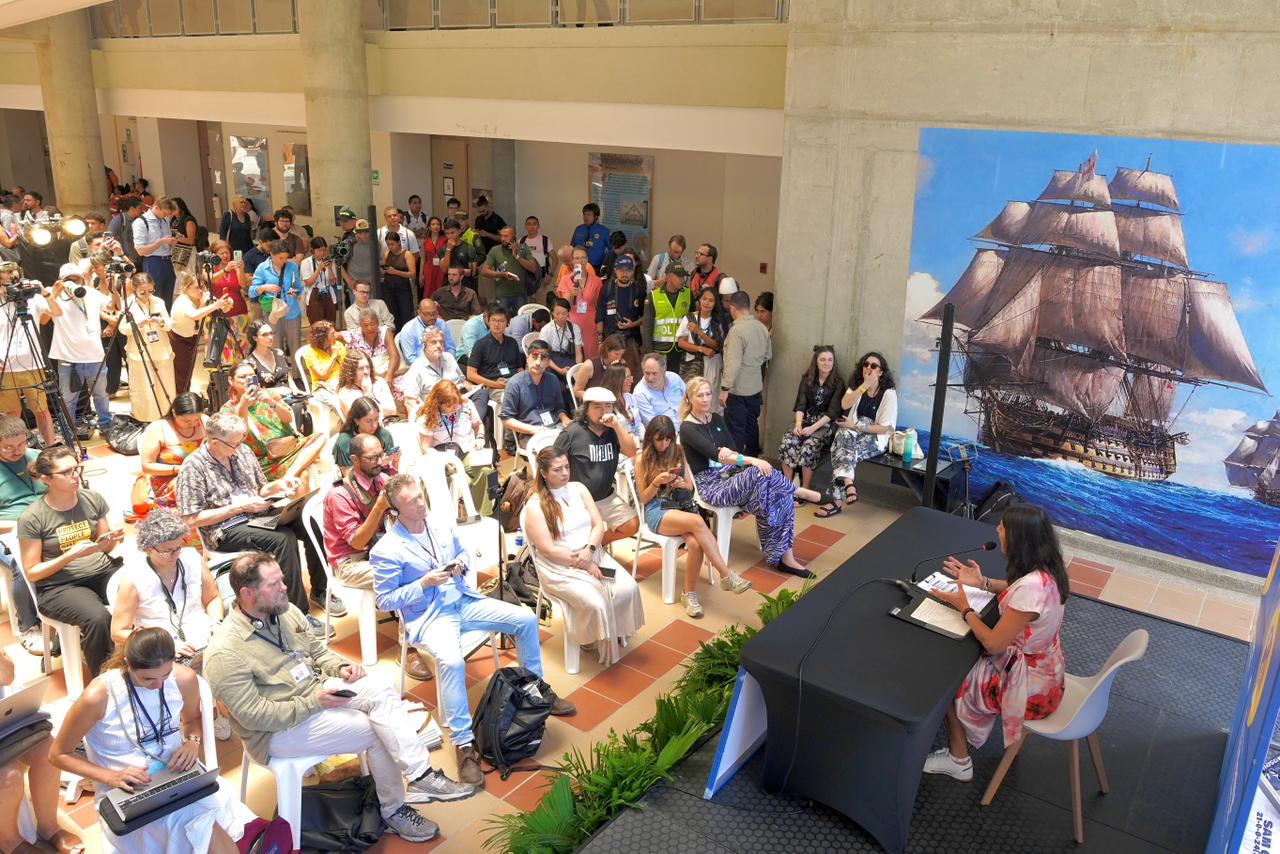
Photo of the opening plenary at Santa Marta, with Colombian minister of environment Irene Vélez. Courtesy Ministerio de Ambiente de Colombia.
Hailed as historic even before proceedings got underway, the first conference on transitioning away from fossil fuels, held in Colombia in April, heralded an important step towards a new era of climate diplomacy and climate action, while building solidarity and momentum among those pushing for transformational change.
Drilled attended the six-day Santa Marta conference hoping to answer one big question: after three decades of bad faith negotiations and corporate capture of the UN process, could this much smaller gathering lead to transformative change or will it be more of the same?
The energy and commitment to achieving a fossil fuel free world was inspiring, and it's clear that some exciting alliances and actions will be taken forward. At one point, Colombian president Gustavo Petro dropped a bombshell by saying he was skeptical about capitalism’s ability to adapt to a non-fossil fuel energy system, calling out green capitalism as a false solution.
But despite the hope and good vibes, many Indigenous and Afro-descendent peoples, human rights experts, peasant farmers, union leaders and climate justice advocates warned that the disproportionate emphasis on macro economics, emissions reduction and western science and knowledge could lead to an extractive and unjust transition.
Maria Reyes, a youth climate activist from Mexico who called on political leaders to show more ambition during a high-level workshop, told Drilled: “It is very dangerous to confuse emissions reduction with a fossil fuel phase out… we need to phase out destructive logics which requires a whole system transformation.”
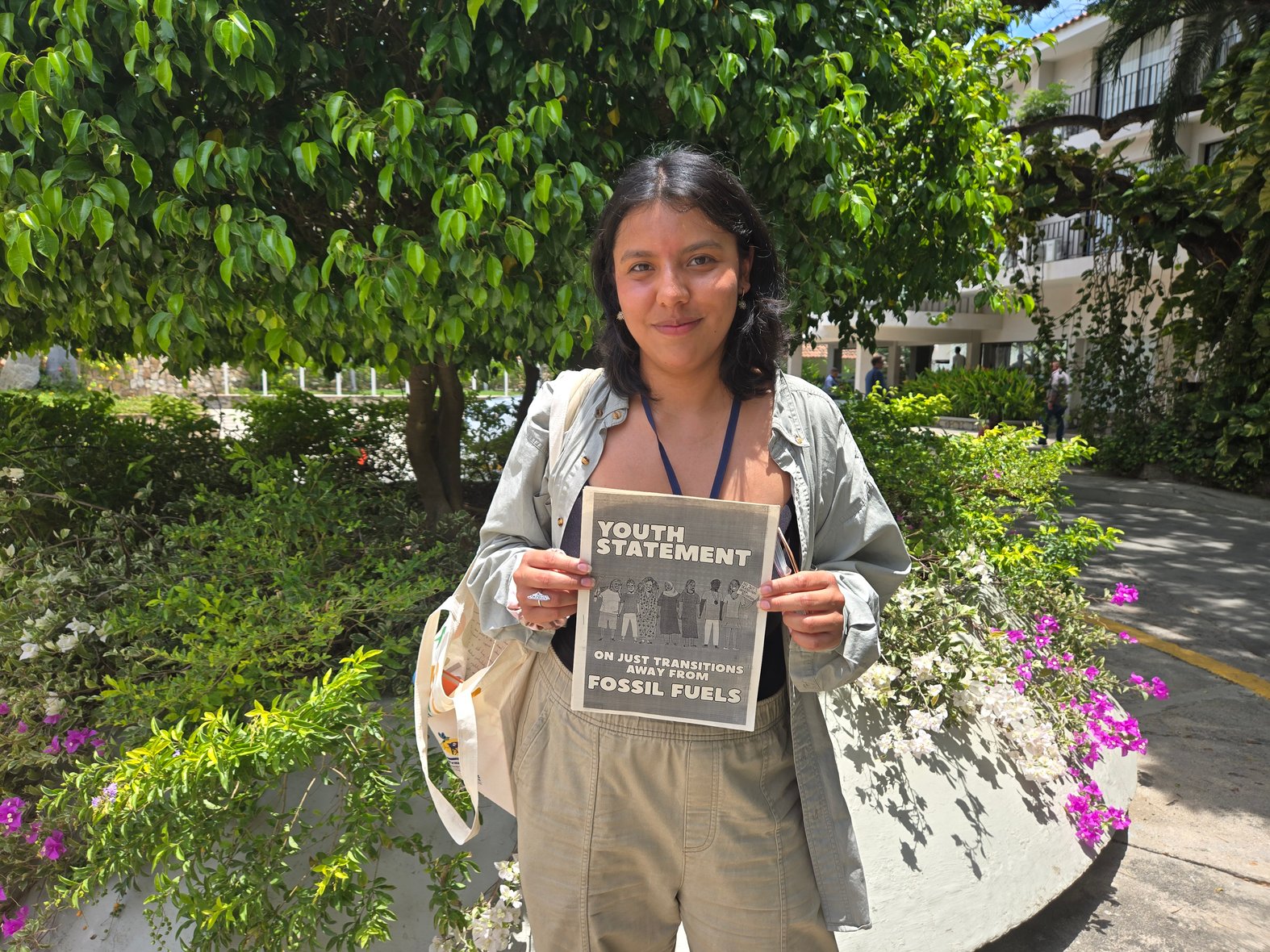
Maria Reyes, youth climate activist from Mexico. Photo by Nina Lakhani.
Necessary ambition
The Colombian and Dutch co-hosts celebrated the inaugural conference for facilitating frank discussions, unprecedented participation, elevating ambition and redefining international cooperation, which for decades have been stifled by the consensus based United Nations Framework Convention on Climate Change (UNFCCC) process.
“This is not the end, this is the beginning of a new global climate democracy,” said Irene Vélez Torres, Colombia’s environment minister at the closing plenary. “In spite of the undeniable contradictions, we have decided to change course and not resign ourselves to an economy built around destruction and war. Rather we’ve decided it's necessary to prioritize life, security, sovereignty and solidarity.”
In the end, 57 states representing around a third of global GDP, 10 subnational governments, and almost 40 parliamentarians were in Santa Marta, as well as unions, children, youth and feminist groups, NGOs, scientists, think-tanks, lawyers, Indigenous peoples, campesinos, and Afro-descedents.
The fact that the first ever space dedicated to transitioning away from fossil fuels–which included an academic pre-conference, a people's summit for civil society groups, an Indigenous peoples assembly, high-level talks and dozens of side-events—took place just five months after the idea was conceived, is rightly being celebrated as a logistical miracle and historic victory. And the consensus around pursuing evidence-based climate policy has been broadly welcomed, especially given the clear links between the disinformation industry, fossil fuel companies and authoritarian regimes.
Harsh realities
Many participants arrived with a vision for radical change and a more just world, but were frustrated to find so many discussions dominated by global north countries and the English language, as they so often are in international climate convenings. The process, they felt, was at times unclear, disjointed and geared towards reforming a broken system, not radical change.
“We appreciate the intent of this historic gathering, but there was no time in the working groups for hard conversations or open dialogue to come up with real solutions that embody the views and perspectives of all parties,” said Frankie Orona, executive director of the Society of Native Nations, who was among the few Indigenous people at the high-level segment of the conference.
“Very few people actually made it into the formal space where the solutions were being shaped,” said Adrian Martinez, director of La Ruta del Clima, a Costa Rica-based NGO focused on climate policy and citizen participation in Latin America.
The Santa Marta process also showed that old habits and power dynamics die hard—in both diplomatic and academic circles.
Backroom shenanigans from some in the “coalition of the willing” raised serious questions about how willing they truly are to challenge the corporate and professional interests rooted in colonial structures, comply with international law and treat Indigenous peoples and other knowledge holders as decision makers and equals.
In one stark example, the investor state dispute settlement (ISDS) mechanism, a major legal and economic barrier to phasing out fossil fuels the Netherlands and Shell played a central role in creating in the 1960s, was explicitly on the agenda yet was reduced to one wishy-washy sentence in the final key takeaways: ISDS "by some were perceived as creating barriers, while the extent to which these barriers are perceived varies." Asked to explain this glaring omission, Dutch Minister and co-host Stientje van Veldhoven said. "This was not a negotiating conference, and therefore different parties, different countries have different positions.”
“The Netherlands maintains 70 bilateral investment treaties with ISDS provisions and accounting for nearly 10% of all arbitration claims worldwide. It came to a conference about removing barriers to the transition and left the largest legal barrier it controls entirely untouched,” said Fernando Hernandez, head of trade and investment policy at Both Ends, an environmental justice organisation based in the Netherlands. “The Dutch had an opportunity to show real leadership as a co-host, but they didn't."
Like always, some countries and corporations appeared to carry more clout than others. Colombia, which is actively trying to exit ISDS, was hit by a new claim from a Spanish gas company as the summit got underway. Meanwhile, the Netherlands is currently defending an arbitration claim by Shell and ExxonMobil in response to shutting down the environmentally disastrous Groningen gas field.
“Overall, global south countries came with concrete ideas and actions needed for the transition, whereas global north countries were more vague,” said Edwin Castellano, Guatemala’s deputy minister of natural resources and climate change and a lead author of the IPCC’s fifth and sixth assessment reports. “The high-level work groups were more about listening to each other's interventions rather than a dialogue or debate about action.”
Which science matters?
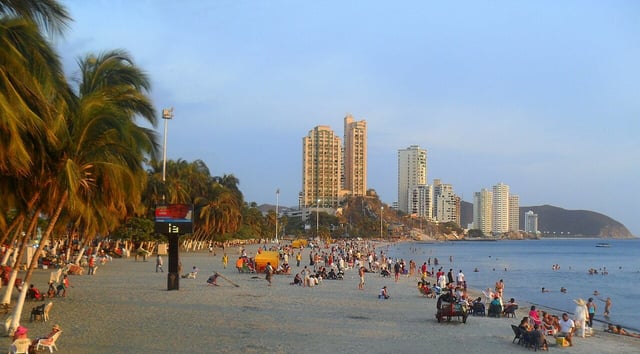
Santa Marta is a Caribbean port city situated at the foothills of the Sierra Nevada, the highest coastal mountain range known as the heart of the world or corazon del mundo by its Indigenous peoples (Kogi, Arhuaco, Wiwa, and Kankuamo). Its interconnected ecosystems range from tropical beaches to snowy peaks, making the region uniquely precious ecologically, culturally and spiritually.
Leaders from the four pueblos shared ancestral knowledge about why and how maintaining equilibrium is the crux of protecting the interconnected ecosystems—including the climate system—now and for future generations. “To imagine a world free from fossil fuels, we have to listen more,” said one leader at the opening of the two day academic conference that preceded the high-level summit. “It’s not about going back, it’s about learning from ancestors to help understand where we go in the future,” said another.
Yet the academic dialogue, which began virtually weeks earlier, was dominated by science, scientists and institutions from the global north, with little input from women scholars, Indigenous and other transitional knowledge keepers, social scientists and community-based researchers.
“There was a strong emphasis on economic and technical aspects of the transition, which risks reproducing the same perversities of the conventional energy system based on dispossession, exclusion, injustices and inequalities,” said Tania Ricaldi, a Bolivian scientist at the Center for Higher University Studies of the Universidad Mayor de San Simón. “The opportunity was wasted to learn from global south researchers with diverse methodological experience on how to transition to an energy system that puts people, nature and life at the centre.”
The academic dialogue and synthesis report, known by its acronym SMART, came up with some strong policy recommendations on methane, greenwashing and ISDS, but the process was criticized in an open letter for perpetuating an old boys club mentality.
“For those of us who joined the academic process in Santa Marta with a genuine commitment to contribute constructively, it was difficult to accept that we had effectively been invited merely to provide “comments” within a very limited format and timeframe, and without transparency, on a pre-fabricated document produced by a closed circle whose composition appeared arbitrary—if not shaped by personal networks and affinities among a small group of white men from the Global North,” the authors write.
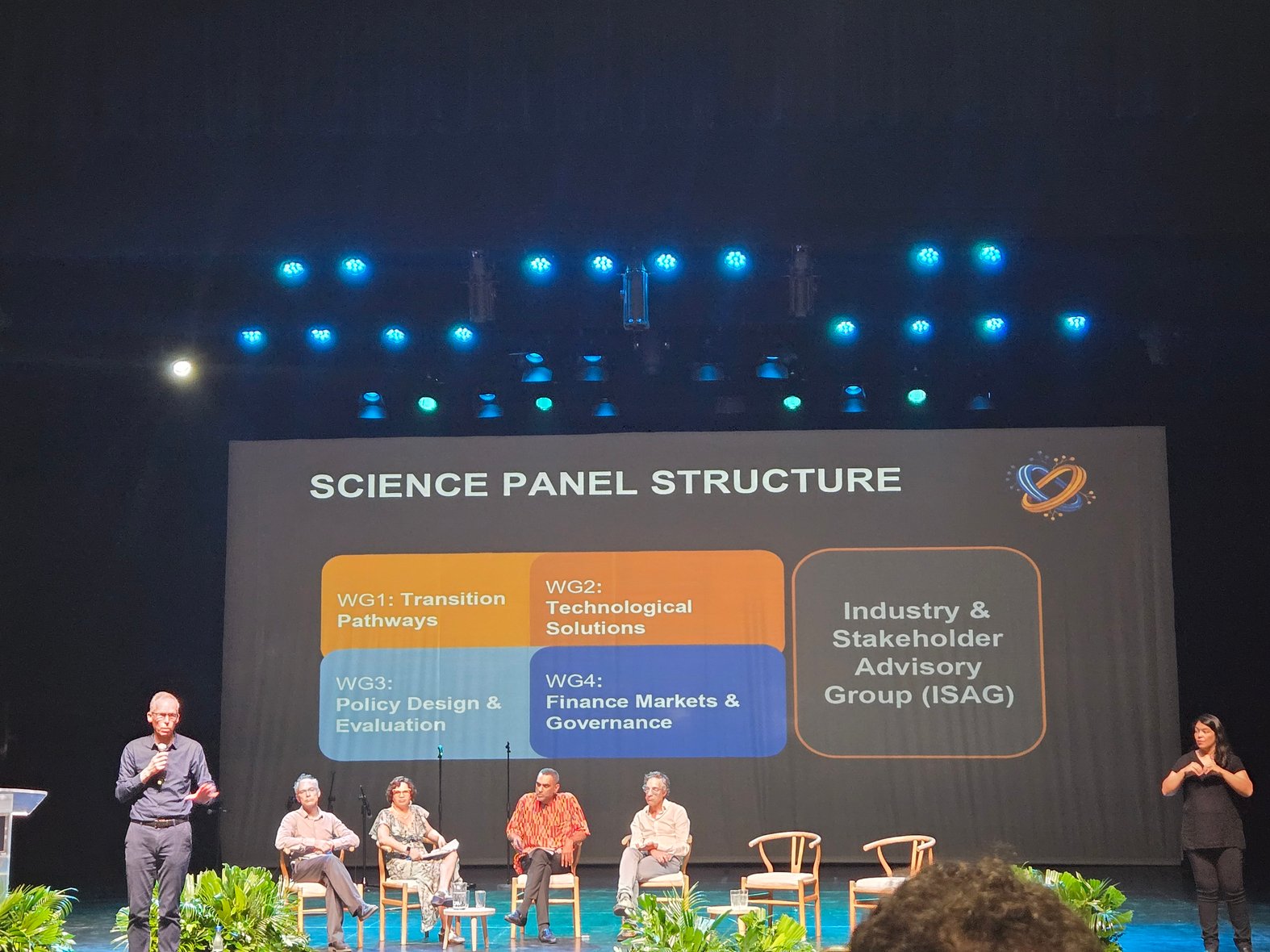
Introduction of the science panel at Santa Marta. Photo by Nina Lakhani.
Separately, a scientific panel of experts for the global transition (SPEGT) was launched with much fanfare in the grand Santa Marta theatre, an event which left many somewhat stunned by the focus on western science and scientists and the failure to mention social justice or human rights, or Indigenous knowledge sources.
The panel is the brainchild of eminent earth system scientists Johan Rockström and Carlos Nobre, who initially proposed the idea at Cop30 in Belém. The co-chairs of the panel, revealed at the launch by Rockström, are pro-market economists Vera Songwe and Ottmar Edenhofer, and Gilberto M Jannuzzi, an expert in energy systems and policy. The panel's work will focus on supporting states in accelerating and scaling up the energy transition, and be backed by an ‘industry and stakeholder advisory group’.
In an interview with Drilled, Rockström said the initiative is still in its design phase but the panel will eventually include 15 energy transition experts from different disciplines, guided by three co-chairs from four working groups (integrated assessment modeling pathways or roadmaps; country-level policy packages; technologies; and finance and governance.) The panel will not duplicate IPCC’s work on scientific consensus, he said.
Rockström confirmed that a “draft list of names for the panel” had been drawn-up as well as “some tentative names on leads for working groups.” They had not considered an open, transparent nomination process, he said, because the panel is an “independent science initiative by individual scientists…we’re doing this work on behalf of humanity but it has no formal mandate,” he said.
But the “coalition of the willing,” as the countries who came up with the idea for the Santa Marta conference during last year’s UN climate summit in Brazil call themselves, has endorsed the panel as central to its mission going forward. This means who and how the panel is populated and funded will come under growing scrutiny. When pressed, Rockström and Minister van Veldhoven said the panel would take into account calls for more transparency and diversity. This seems fundamental given the fossil fuel industry's track record in blocking climate action and promoting false solutions, in part by wielding influence in elite universities, research programs and journals, as well as in the UNFCCC and other UN fora.
“I totally share the importance of having representation from let's say non-conventional science, but it will be a challenge and how we actually do it in practice is still in front of us,” said Rockström. “One of the reasons why we decided, which of course can be criticized, to keep the science panel to only experts on the energy transition, and not allow for lobbyists or civil society groups or any non-academic groups, is that the science panel is a science panel. The stakeholder group, which will have a very tight interface, is a separate entity.”
For economists to dominate the panel leadership, however, is a choice to replicate previous such efforts. The IPCC, for example, finally invited other social scientists to participate for the very first time on the most recent report, published in 2022, but has always included economists. Meanwhile academics who study climate obstruction increasingly point to the economic argument against climate policy as equally corrosive and unfounded as climate science denial once was.
No funding for the SPEGT has yet been secured, but will likely come from “foundations and philanthropy", said Rockström.
Shortly after, Rockström told states at the high level opening plenaries that “massive carbon removal” was required for a “realistic transition”, interpreted as a nod to carbon capture, biofuels and carbon markets, which many scientists and communities have condemned as false market solutions irreconcilable with a just transition.
In the end, organisers announced the creation of three workstreams--national roadmaps, aligning trade policies, and transforming financial architecture–that will take the implementation agenda forward, each supported by global north organisations including the OECD, International Institute for Sustainable Development and SPEGT. The workstreams neither reflect the depth or range of the recommendations by the civil society participants or academics, nor the spirit of south-north cooperation core to the Santa Marta mission.
"Despite the idea of Santa Marta emerging from the south—white researchers and institutions from the global north unashamedly captured so much of the knowledge production space there. This weakened the policy recommendations and marginalized justice, which we must fight back against in Tuvalu,” said one researcher who asked to remain anonymous.
The final conference report is expected in June, and will hopefully expand on other key issues from the academic dialogue such as methane, central banks, fossil fuel free zones, and ISDS, according to Kjell Kuhne, director at the Leave it in the Ground Initiative (Lingo) and academic conference co-organizer.
“The Santa Marta process has stirred up a huge amount of ideas and proposals, with lots of energy and good will behind them. Much of this is up in the air right now. If your piece didn't make it into the co-chairs takeaways document, that doesn't mean it won't happen,” Kuhne said. “The Santa Marta process community is all of us, and it is up to all of us to turn the good ideas into actual work. I would encourage everyone to move where and how they can - governments can't, shouldn't, and won't control everything. Understandably, you don't solve an entrenched challenge like fossil fuel addiction in a few days of work.”
But for many, the conference reflected and replicated destructive, intolerable power structures. “We cannot continue to accept the system that waters down the issues, our plight, our internationally recognized inherent, distinct, and collective rights, to usher in a new form of colonialism cloaked as a just transition,” said Larissa Baldwin Roberts from the Bundjalung Nation and Indigenous peoples representative. “We will not stand by as our kin, our lands, our waters, territories, and non-Indigenous people suffer to maintain the status quo. This structure will not be where we find our salvation and liberation.”
“We cannot continue to accept the system that waters down the issues, our plight, our internationally recognized inherent, distinct, and collective rights, to usher in a new form of colonialism cloaked as a just transition.” — Larissa Baldwin Roberts, Bundjalung Nation and Indigenous peoples representative.
Human rights were MIA
The fossil fuel economy is driving multiple interconnected crises including the climate crisis, ecosystem destruction, disinformation, authoritarianism, health harms, militarization and illegal wars, food insecurity, water scarcity, and widespread human rights violations globally. Elisa Morgera, the UN special rapporteur on climate change, has made the case for a rights based approach to tackling the fossil fuel economy, which impacts every single aspect of our lives.
In Santa Marta, the protection of human rights, including the right to a healthy and sustainable environment, were core to just transition proposals put forward by Indigenous peoples, Afrodescendent people, some NGOs, unions and social movements, yet absent from the thematic pillars of the conference. Notably, the recent spate of international court rulings on state obligations around climate change, including the International Court of Justice (ICJ) advisory opinion in July 2025, were also barely mentioned.
The ICJ ruling confirmed the right to a healthy environment is fundamental to exercising all other rights, and that states have legally binding duties under customary international law to prevent and repair harms to the environment including the climate system. Failing to take climate action, which includes regulating fossil fuel production and consumption, the ruling said, may constitute an internationally wrongful act and entail a whole host of legal consequences.
“This was particularly relevant to Santa Marta, but these dimensions were not fully explored either as a framework to think about state duties or as an incentive or a stick to sort of speed up climate action and think about a legally sound timeframe to achieve defossilization,” said Candy Ofime, international human rights lawyer and climate justice researcher at Amnesty International.
Canada, Australia, Norway, the Netherlands, Brazil and Nigeria are among the coalition of willing countries that continue to expand fossil fuel operations at home, while others like the UK, France and Italy have major corporations with growing international operations. None support a non-proliferation treaty or any global binding framework to govern a just fossil fuel transition. According to Colombian environment minister Vélez, the new national roadmap workstream (supported by SPEGT) will take into account ‘exported emissions’ from producer countries but has not contemplated accountability for their multinational corporations.
Good start, room for improvement
Santa Marta marked a historic pivot from the fossil fuel logjam, but good intentions will not be enough to break down the structure and relationships propping up the fossil fuel economy, according to Harjeet Singh, strategy advisor at the Fossil Fuel Treaty Initiative. “We must dismantle the silos of the past by demanding radical transparency and ensuring that more governments, scientists, indigenous peoples, and civil society from the Global South are the ones leading the conversation, informing the analysis, and driving the implementation."
The biggest achievement was perhaps confirmation that a second conference will take place in Tuvalu, a small Pacific island state, in April 2027. It will be co-hosted with Ireland, which organizers said signals both the momentum and importance of global south and north cooperation.
The Pacific islands face an existential threat from the climate crisis and energy insecurity, and have emerged as global leaders in pushing for climate accountability. Vanuatu spearheaded the ICJ climate case and is leading negotiations at the UN, vehemently opposed by the US, for a resolution to turn the 2025 advisory opinion into action. Just before Santa Marta, an island coalition issued a landmark regional declaration calling for a binding fossil fuel treaty and urgent phase out.
Tuvalu will push for more ambition and make the case for traditional knowledge systems as core to achieving a just transition, according to Joseph Sikulu from Fossil Fuel Free Pacific. “Our goal has always been to push the limits of people's imaginations, push the limits of their understanding of what is logical and accepted as science and knowledge. What we've seen over the last decade is that university science is affirming traditional science and knowledge that people in our villages know has existed for thousands of years. Coming to the Pacific is an opportunity to see what this actually looks like.”
Correction: An earlier version of this story incorrectly identified one of the plenary participants as Johan Rockström in the caption. We regret the error