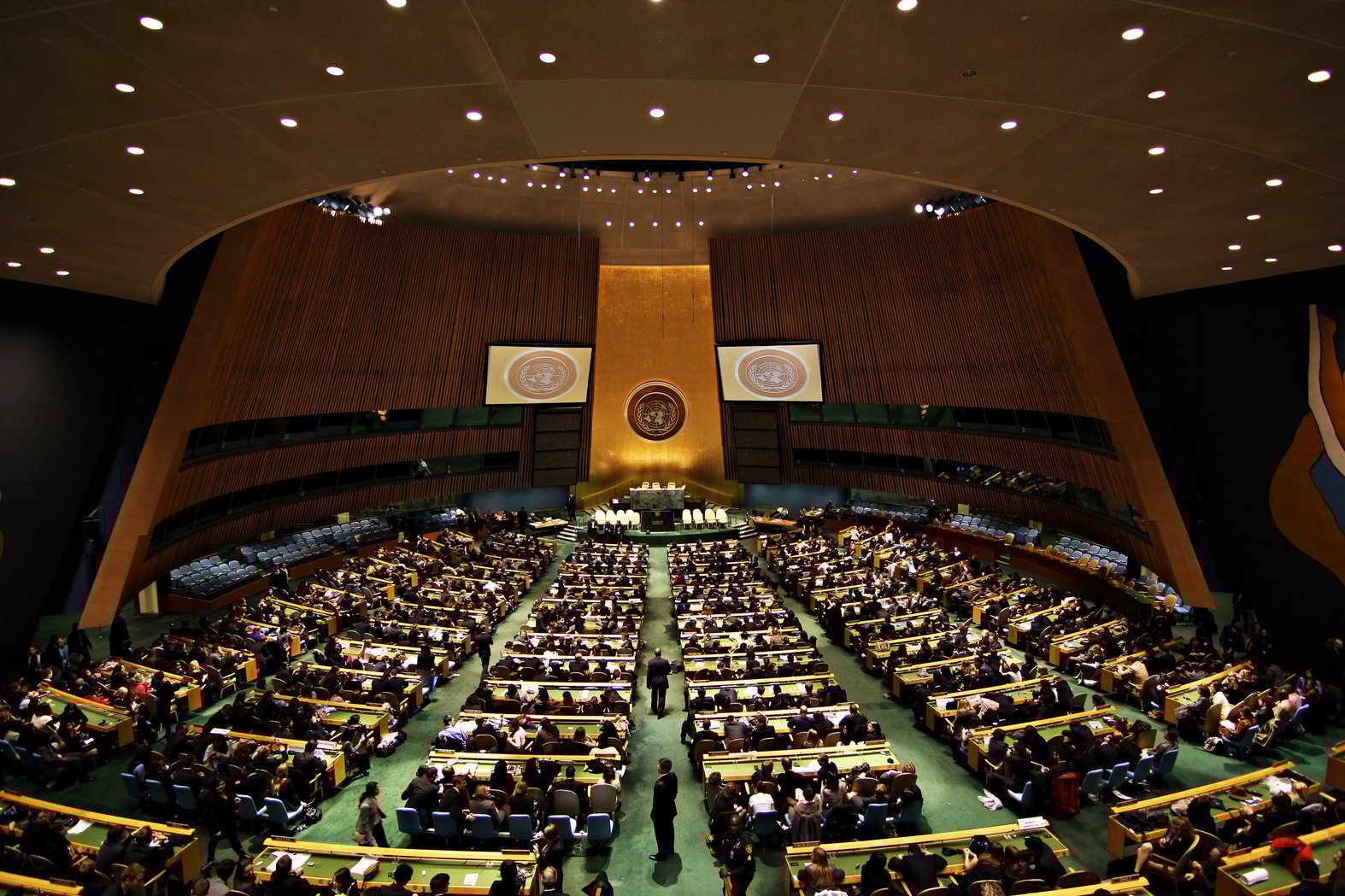
Vanuatu is leading difficult negotiations between members of the United Nations (UN) on a major new climate resolution, which has been described as a “credibility test” of the international legal system.
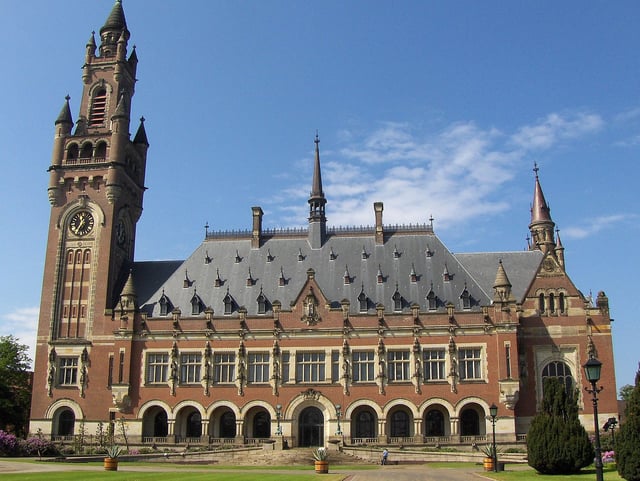
The resolution, expected to be put to the UN General Assembly later this year, seeks to affirm a landmark ruling by the International Court of Justice, which last year said states have legal duties to combat climate change and that failing to do so could result in various forms of reparations.
The ruling followed years of campaigning by Pacific island youth with diplomatic leadership from the island nation of Vanuatu, which together managed to secure a unanimous vote from the UN in 2023 asking the court for a formal advisory opinion. The resulting document is technically non-binding, but it is considered authoritative and sets out the court’s view on existing law.
When the opinion was published last July, Vanuatu’s climate change minister Ralph Regenvanu hailed it as a milestone moment for climate justice and has since been working to pass a new UN resolution to help it make a difference on the ground.
Regenvanu said last year that he wanted to balance the most ambitious possible statement with maximum state support. The aims were to fully and unreservedly welcome the ICJ’s advisory opinion, to strengthen climate action in line with clarified legal obligations, and to advance climate justice through mechanisms to operationalize it.
The last two parts are proving the most difficult.
An initial draft resolution circulated to all states at the start of February had called for a “rapid, just and quantified phase‑out of fossil fuel production and use.” That has now been replaced with a “transition away” from fossil fuels, mirroring the strongest language that states have managed to agree at international talks.
Speaking at a webinar last week, Vanuatu’s climate justice envoy Lee-Ann Sackett admitted this was a “major concession.”
The move will be particularly disappointing for states seeking ambitious climate action because the ICJ’s advisory opinion was clear about the need to tackle the main source of anthropogenic greenhouse gas emissions. It said a state’s failure to take appropriate action to protect the climate, including through the production and consumption of fossil fuels, the granting of fossil fuel exploration licenses or the provision of fossil fuel subsidies, “may constitute an international wrongful act which is attributable to that state.”
Another major change to the initial draft scraps a call to set up a “comprehensive and transparent” international register of damage, loss or injury attributable to climate change, asking instead for a report on the idea. Sackett said this was a sensitive area and the result was a “really significant compromise.”
Margaretha Wewerinke-Singh, associate professor of sustainability law at the University of Amsterdam and lead counsel for Vanuatu during the ICJ proceedings, said a group of countries was arguing “very aggressively” to get Vanuatu to withdraw the resolution altogether or to get a text that essentially undermines the opinion.
Furthermore, the group—which news reports suggest include the U.S.—is actively lobbying other states, said Wewerinke-Singh, “states who, when they would act in accordance with their own interests or what their own people want, would be wholeheartedly supportive as they had been in previous stages.”
Nonetheless, Vanuatu is still sticking firmly to its first aim, to get a full and unqualified welcome for the advisory opinion. Sackett said a resolution that simply takes note or acknowledges the court’s findings would be far too weak. “To accept it in any other way than a welcome would be unacceptable for Vanuatu and for I think many other states.”
Bryce Rudyk, professor of international environmental law at New York University and legal adviser to the Alliance of Small Island States (AOSIS), said the group had a range of views on the details but is “strongly, strongly supportive” of the resolution as a whole. Few others are willing to go on the record yet, although Drilled understands there is support in Europe, Africa and Latin America.
To try to steer through an agreement, Sackett said Vanuatu had held regional consultations on the draft, with active participation from more than 100 states and nearly all listening intently.
The discussions have rehashed arguments that took place during the ICJ’s hearings in 2024 and which the advisory opinion should have settled.
For example, some high polluting states are once again seeking to restrict their obligations to international climate treaties—the UN Framework Convention on Climate Change and 2015 Paris Agreement—because those treaties allow them to set their own targets and policies and there is no legal penalty if they fail. By contrast, the court unequivocally stated that states have climate duties under a wide range of customary international law.
“These arguments coming out from some states are unhelpful and take us away from what the resolution is really about,” said Sackett.
Wewerinke-Singh pointed out that those arguing that climate action should be kept within the climate regime are also trying to water down that regime. Earlier this year, the US formally left the Paris Agreement following an order from Trump.
In a world characterized by increasing violence, instability and disrespect for international law, Wewerinke-Singh says the resolution will therefore measure whether the international legal system still functions as it should. “It’s not just a follow-up on this opinion… it is also a credibility test.”
Mary Robinson, former prime minister of Ireland and part of a group of public figures known as The Elders, urged governments to back the resolution. “Standing with Vanuatu means standing with the international rule of law, with science and, frankly, with solidarity.”
Vanuatu had originally hoped to get the resolution to a vote by the end of 2025, but the timetable has slipped several times. The current anticipated goal is Earth Day on 22 April.
The aim was to secure unanimous agreement on the resolution, mirroring the success of the original one in 2023. But diplomats believe this is increasingly unlikely and consensus is not essential for the text to pass. “If the general assembly with a good majority adopts a strong resolution that would still be, I think, a sign that that provides reason to be hopeful,” said Wewerenke-Singh.
Rudyk said it was really important to get as close to unanimous consensus as possible. “Advisory opinions are not legally binding. This process is about states agreeing with those conclusions so that they can actually become the current understanding of international law.”
Vanuatu’s focus on pursuing the resolution is likely one of the reasons that the advisory opinion didn’t make much of a mark at the last climate talks in Brazil last year.
However, it was explicitly welcomed in the Belém Declaration on the Just Transition Away from Fossil Fuels, which was signed by at least 24 countries from Australia to Vanuatu. The declaration is an important foundational text for the First International Conference on the Just Transition Away from Fossil Fuels, being held in April in the port city of Santa Marta in Colombia.
Even without a resolution, the advisory opinion is starting to make its mark in climate litigation all around the world.
Earlier this year, Greenpeace won a landmark claim against the government of the Netherlands for discriminating against citizens of the Caribbean island of Bonaire. It leveraged advisory opinions by the ICJ and the Inter-American Court of Human Rights to successfully argue that the state had legal duties to address climate change and to help vulnerable communities adapt to it.
The document is also referenced by a group of Korean farmers suing state-owned utility KEPCO for climate damages, in the Council of Europe’s latest update monitoring Switzerland’s compliance with a key climate ruling by the European Court of Human Rights, and in a policy paper on environmental crimes from the International Criminal Court.
In Brazil, a judge ordered a coal plant and mine to stop operating last August, referencing the advisory opinion's "explicit" statement that state mitigation measures must cover fossil fuel emissions. However, the ruling is currently on hold by an appeal court which says the judge overstepped her authority into policy-making.
Many more cases are likely to come, potentially using the ICJ advisory opinion to affirm climate science, scrutinize national climate targets and seek reparations. Experts have already warned that the Trump administration’s efforts to ramp up Venezuela’s oil industry after illegally claiming ownership of the country’s fossil fuels leaves the U.S. open to litigation.
“Personally,” Regenvanu said earlier this year, “I believe it's in the realm of domestic courts in which the advisory committee from the ICJ would have the most transformative effect—citizens forcing their own governments to make changes in law and policy through legal action.”